
Chimpanzee Intergroup Conflict
On January 7, 1974, two of Jane Goodall’s Tanzanian field researchers, Hilali Matama and Yassini Selemani,1 followed a group of eleven Kasakela community chimpanzees on a patrol deep into the territory of the neighboring Kahama community. There, the group ambushed and brutally attacked a Kahama male named Godi, leaving him fatally injured.
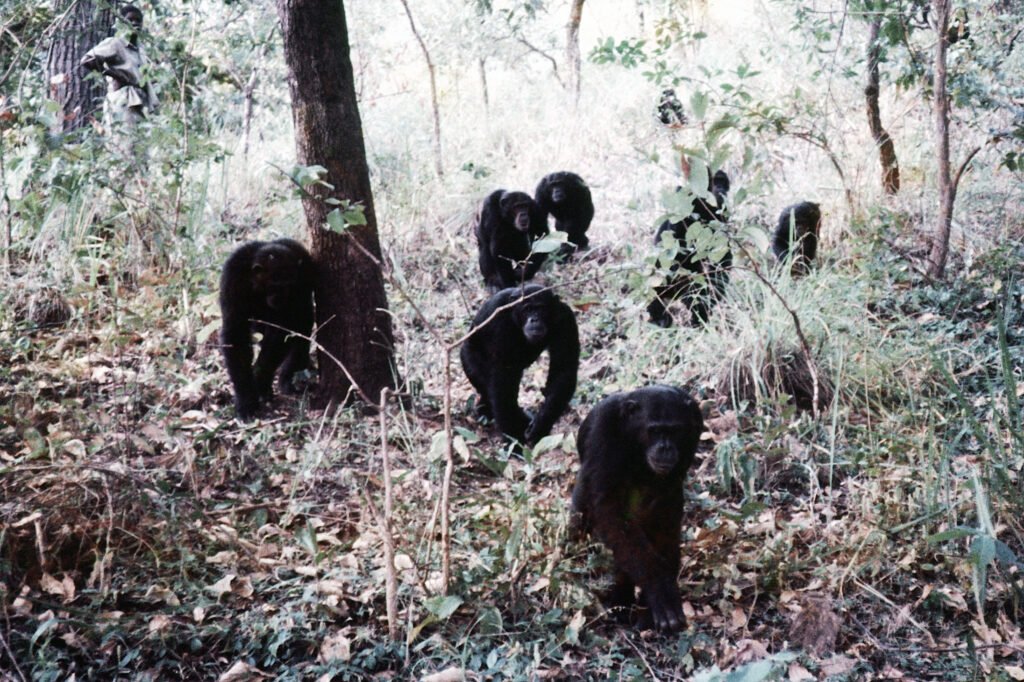
Adult male Sherry followed by Figan and other Kasakela males patrol into Kahama territory on August 6, 1974, the 38th day of the Figan Follow (photo by Curt Busse  ).
).
This unprecedented observation — soon followed by a similar attack seven weeks later — shocked Jane and her research team, overturning her long-held belief that chimpanzees “are rather nicer than humans.” Such attacks continued intermittently over the next four years, culminating in the complete elimination of the Kahama community, a period now sometimes referred to as the “four-year war.”
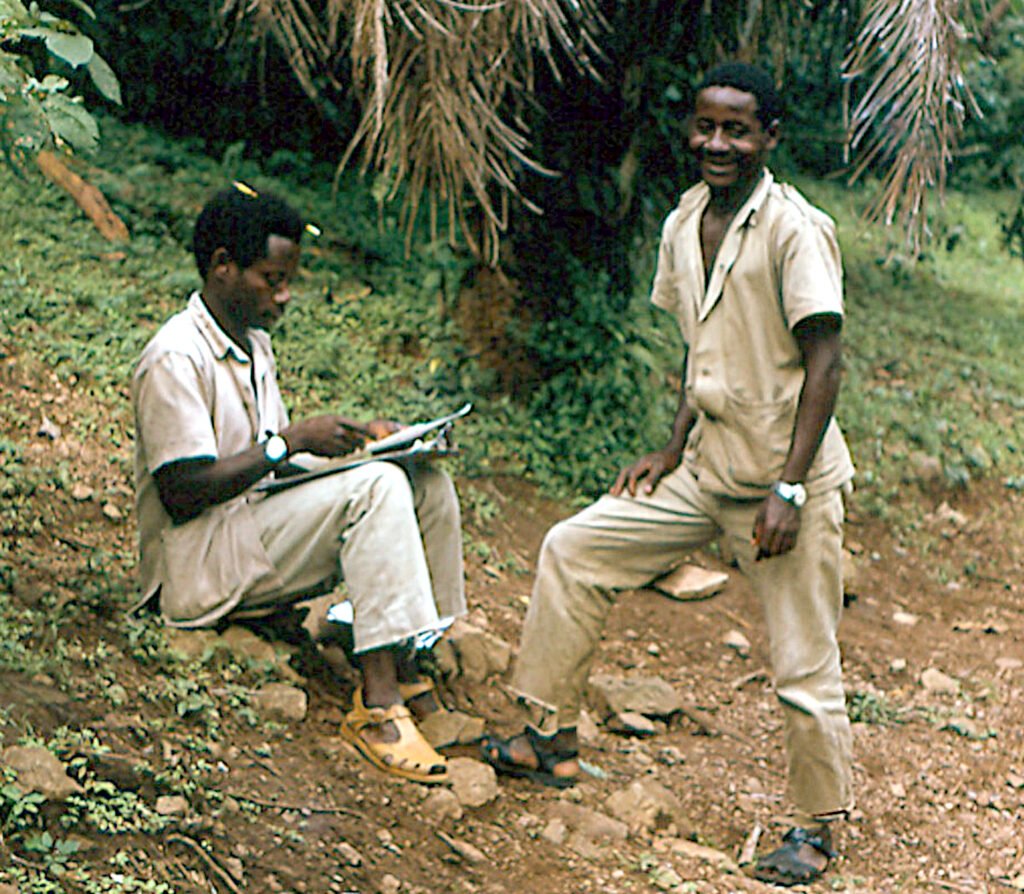
Hilali Matama (left) and Yassini Selemani (right) witnessed the first attack of the “four-year war.” (Photo by Larry Goldman, 1974)
The Kahama community had split from the Kasakela community only a few years before the attacks. Until then, the victims and their attackers had belonged to the same chimpanzee community.2 One of the victims, Goliath, had even been the alpha male of Kasakela when Jane arrived in 1960.
Jane rightly received credit for discovering war-like intergroup conflict in chimpanzees following this group fission. She presented the preliminary findings at the Wenner-Gren Symposium in Austria in August 1974 and finalized the manuscript in 1975. However, despite its extraordinary significance, the paper did not appear in print for another four years due to publication delays.
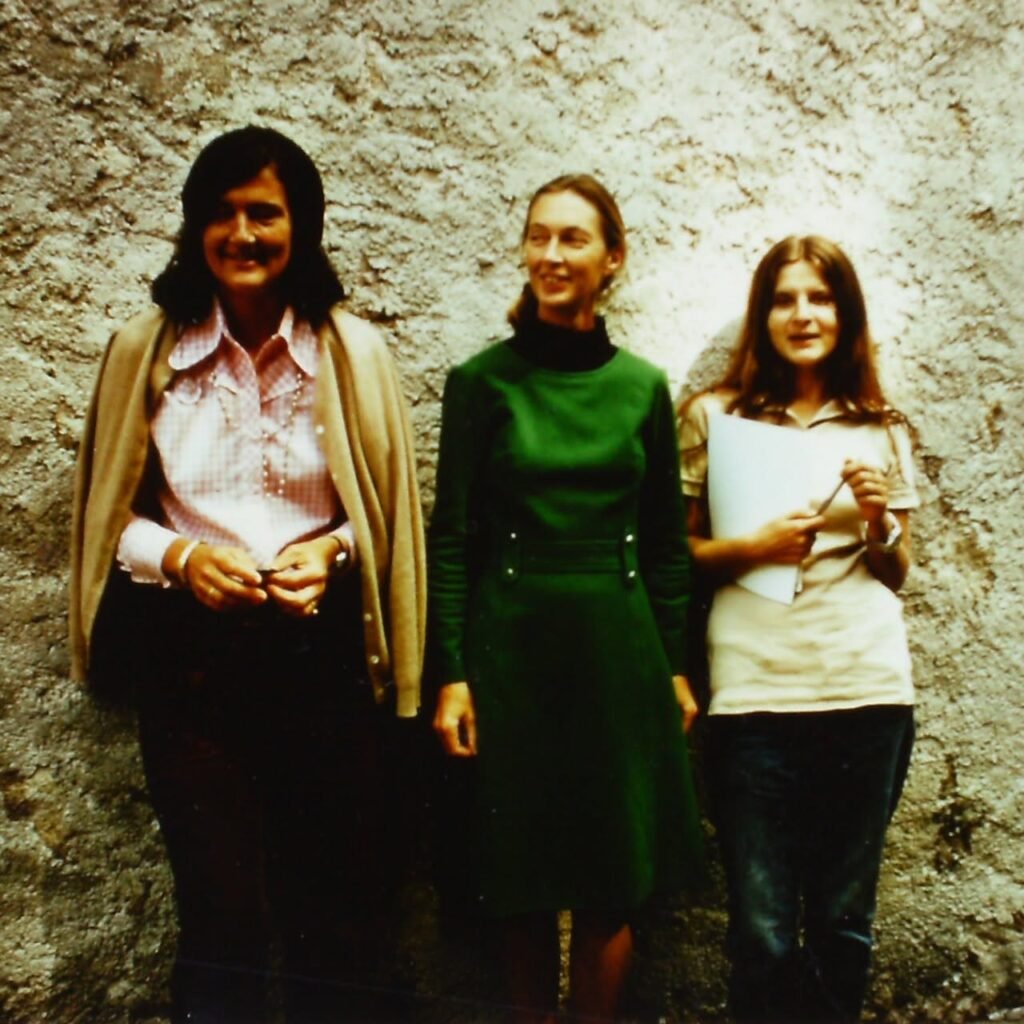
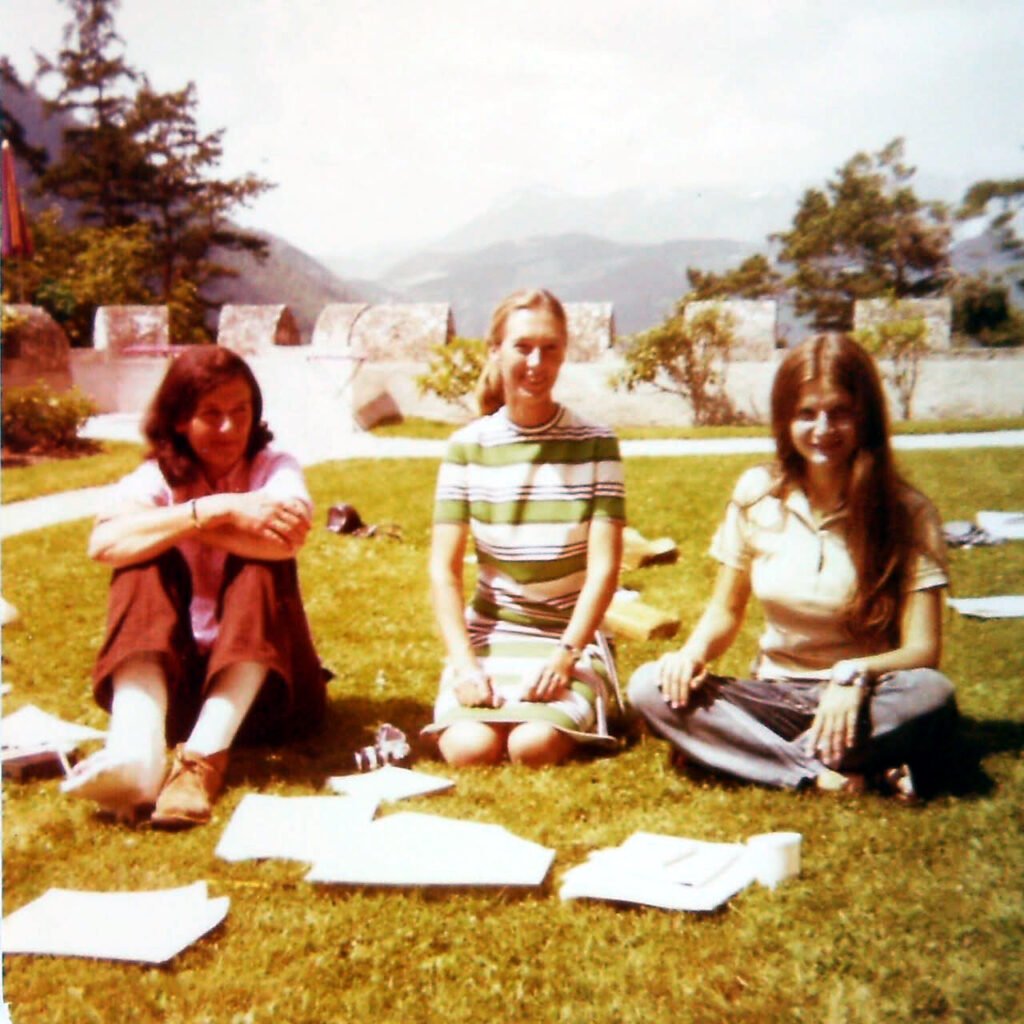
Dian Fossey, Jane Goodall, and Biruté Galdikas at the 1974 Wenner-Gren Symposium in Austria, where Jane presented the preliminary findings on intergroup conflict in chimpanzees. (Photos from the Dian Fossey Gorilla Fund, Facebook page, March 25, 2026).
This landmark paper (available below and in PDF) presented the first documented evidence of intergroup conflict between two chimpanzee communities, a subject that has become a major focus of interest in contemporary primatology.3
Particularly striking was Jane’s decision to include seven coauthors, three of whom were local Tanzanian field researchers. Such authorship was virtually unheard of in the 1970s and stands as a testament to Jane’s willingness to share credit and her profound appreciation of the indispensable contributions of her local staff.
Here is the complete article in PDF format. The citation is:
Goodall, J., Bandora, A., Bergmann, E., Busse, C., Matama, H., Mpongo, E., Pierce, A., & Riss, D. (1979). Intercommunity interactions in the chimpanzee population of Gombe National Park. In D. A. Hamburg & E. R. McCown (Eds.), The Great Apes: Perspectives on Human Evolution (Vol. V, pp. 13–53). Menlo Park, CA: Benjamin/Cummings.
The chapter is posted here by one of the original authors for scholarly and educational purposes, with full acknowledgment of its original source.
The successor publisher has confirmed that it does not locate or assert rights to this title. No commercial use is intended. If you believe you hold rights to this material and have concerns about its posting, please contact me and I will respond promptly.
© 1979. All rights acknowledged.
- Hilali authored the original report of the attack on Godi. Yassini’s role as a co-witness to this historic event was not uncovered until 2025, with the assistance of Ian Gilby, Director of the Jane Goodall Institute Gombe Chimpanzee Archive.
↩︎ - Feldblum, J. T., Manfredi, S., Gilby, I. C., & Pusey, A. E. (2018). The timing and causes of a unique chimpanzee community fission preceding Gombe’s “Four-Year War”. American Journal of Physical Anthropology, 166(3), 730–744.
↩︎ - Wrangham, R. W., & Glowacki, L. (2012). Intergroup aggression in chimpanzees and war in nomadic hunter-gatherers: Evaluating the chimpanzee model. Human Nature, 23(1), 5–29.
↩︎