
My First Night at Gombe
Arrival
I arrived at Gombe National Park on January 11, 1974, a 21-year-old undergraduate about to begin a study of adult male chimpanzees. As I stepped off the water taxi that morning, I had no idea that three extraordinary events had occurred on consecutive days just before my arrival: one comically absurd, one that nearly cost Jane Goodall her life, and one that would forever change our understanding of chimpanzees.
The trip to Gombe was quite an expedition. I met up with fellow students Grant Heidrich and Kathryn “Kit” Morris in Brussels. We flew on a Sabena charter to Dar es Salaam, with an unscheduled stop after midnight in Entebbe, Uganda, during the rule of strongman Idi Amin.
After two sweltering days in Dar es Salaam, a two-day train ride across Tanzania, and a miserable night in Kigoma, we finally boarded a water taxi at the Kigoma dock. We were thrilled and relieved to be on the last leg of our journey: a three-hour ride along the shore of Lake Tanganyika in a crowded boat filled with villagers and their chickens and goats.
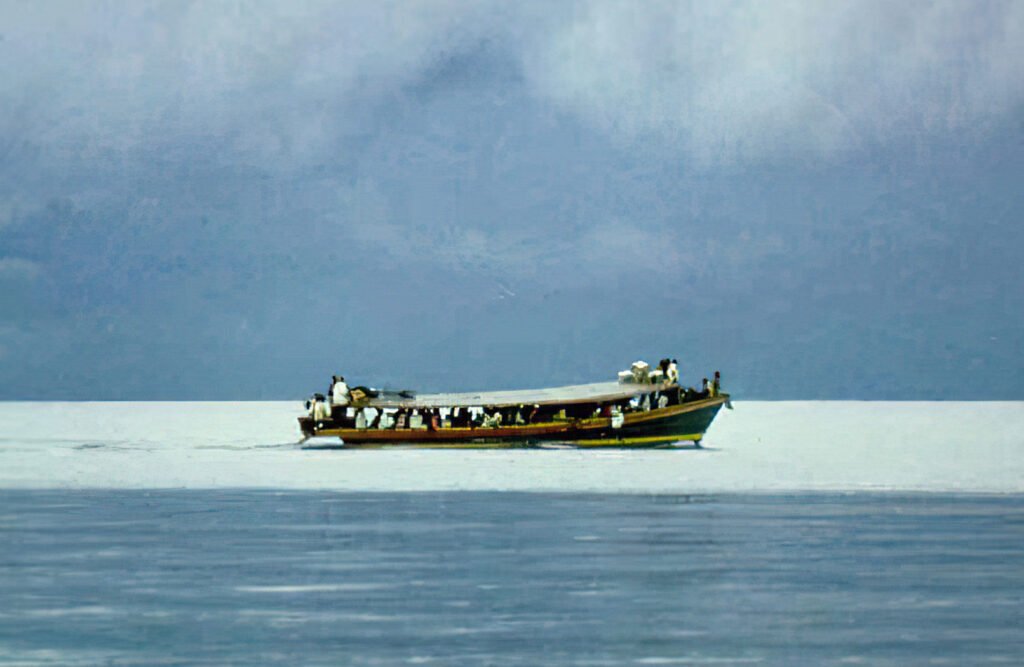
Water taxi on Lake Tanganyika on a stormy day ca. 1974 (photo by Emilie van Zinnicq Bergmann-Riss).
About halfway into the trip, we reached the border of Gombe. Rising steeply from the lake, the forests and mountains were more spectacular than I had imagined. I pictured chimpanzees high in the lush green treetops, silently watching us pass below.
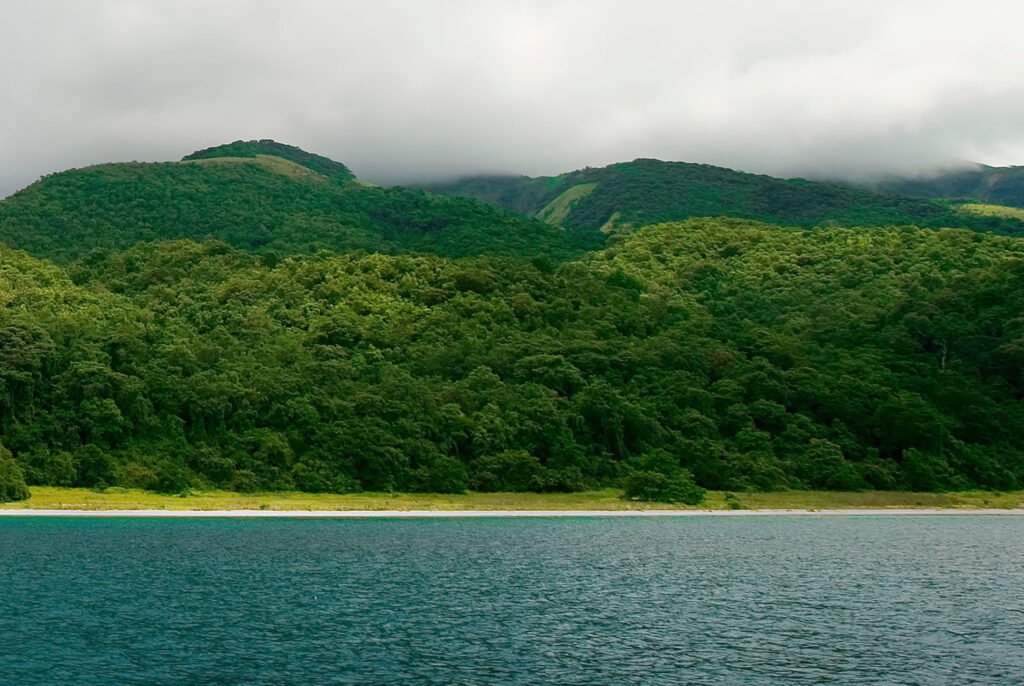
Nyasanga Valley in Gombe National Park during the rainy season (iStock.com/guenterguni).
Eventually, the boat landed on a broad, gravelly beach known as Kasakela. I grabbed my duffel bag and stepped ashore as the water taxi pushed off and continued north. The three of us stood there, taking in our welcoming committee: a group of baboons sorting through the sand farther up the beach.
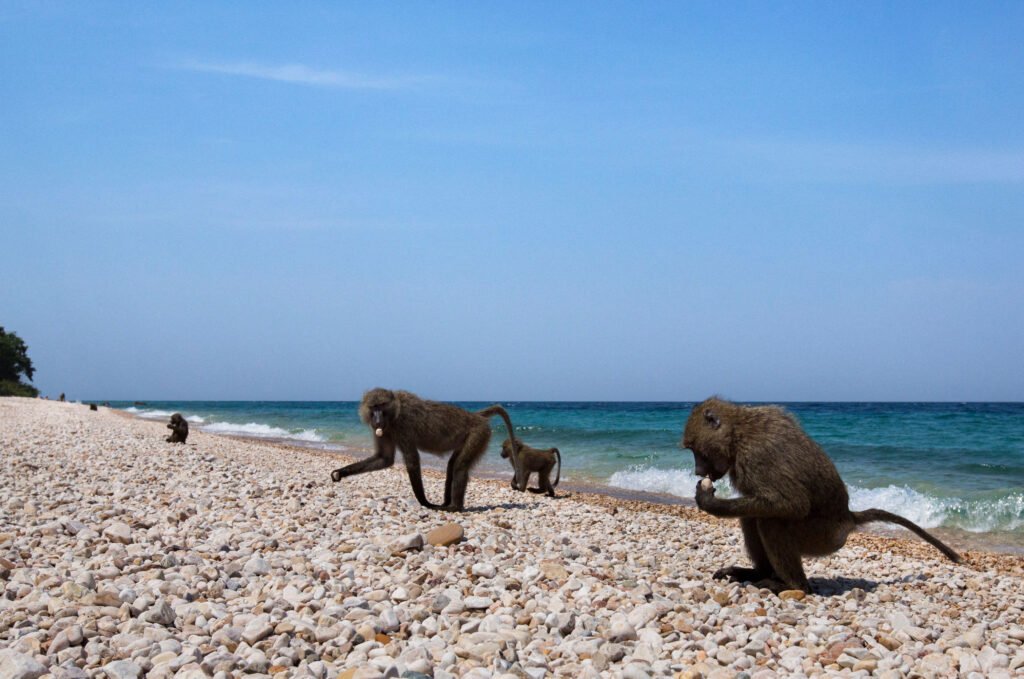
Baboons along the Kasakela beach (Nature Picture Library / Alamy, 2012).
After a few minutes, a young woman appeared from the tree line and strode toward us.
“What are you guys doing here?!” she exclaimed, in a European accent.
That’s how I first met Emilie van Zinnicq Bergmann, Jane’s administrator from the Netherlands and one of my closest friends ever since. She had been expecting us a couple of days later, and our early arrival had caught her off guard. But she quickly warmed up, ushering us toward a cluster of rustic buildings and introducing us to several of the staff and students.
First Impressions
Emilie then took us into the Mess: a kitchen, dining room, and lounge all in one, tucked into the forest at the edge of the beach.
After a lunch of marmalade sandwiches, she escorted us to “Chimp Camp,” the banana feeding station about fifteen minutes up a steep forest trail. There we met fellow students John Crocker and Sara Simpson, along with several of Jane’s Tanzanian field assistants. I was excited to meet my first two wild chimpanzees: an adult female named Gilka and an old male named Hugo.
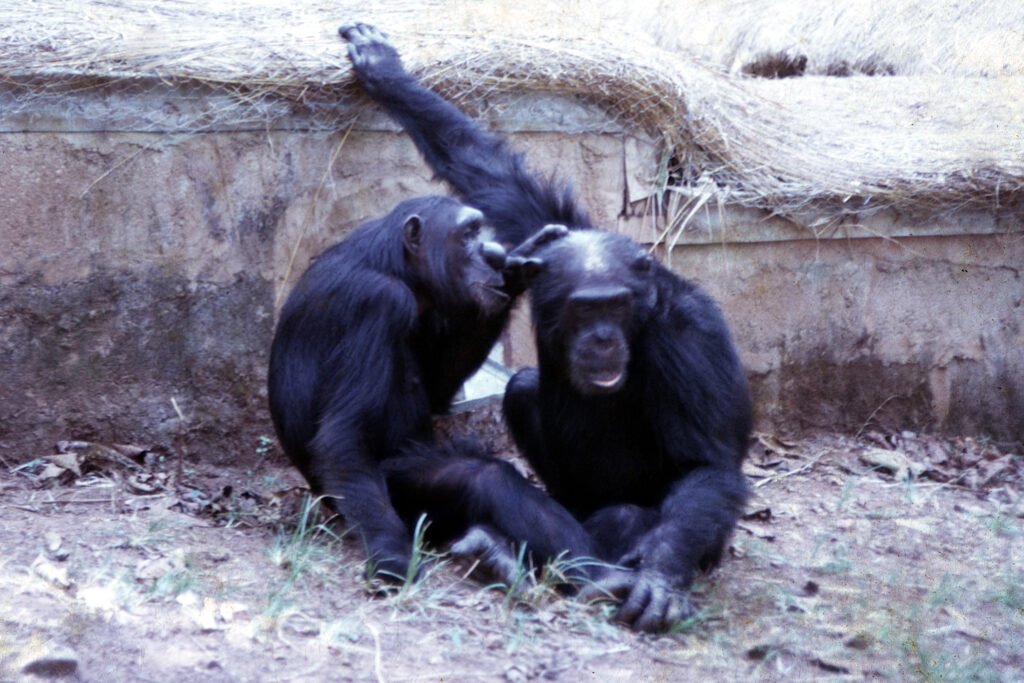
Gilka (left) grooms Hugo next to the “banana trench” at Chimp Camp. Gilka had a bulbous nose from a chronic fungal infection.
Back at the Mess, Emilie broke the news that Grant and I would be spending our first night in The Cage while our permanent huts were being prepared.
She walked us fifty yards up the beach to an enclosure of chain-link fence topped with a sheet metal roof — the same spot where Jane’s seven-year-old son Grub had played as a small child, safely out of reach of the chimps.
I tossed my duffel bag onto one of the cots and immediately noticed a foot-long black creature crawling along a nearby pole.
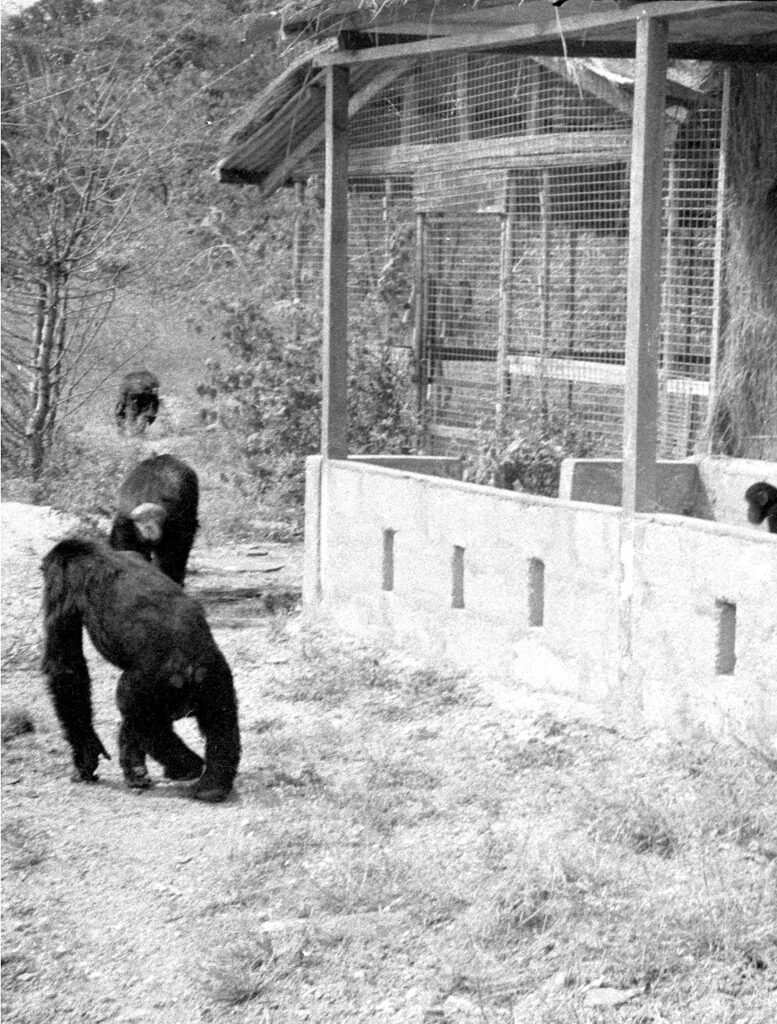
Faben and Gigi walk toward “The Cage.”
“Damn centipede,” Emilie said, with a hint of embarrassment.
She called over one of the workers, Saidi, who dispatched several of them with his machete.
“Just use the mosquito net at night and they’ll leave you alone,” Emilie explained. “And always check your bedding before you get in. Scorpions like dark places too.”
This did nothing for my confidence.
The Mess
Grant and I watched some baboon youngsters playing on the beach, then made our way back to the Mess. The only entrance was through the kitchen, where Dominic — Jane’s chef since her arrival in 1960 — was busy preparing a dinner of rice and curry.
The Mess was where the students gathered every evening for dinner and to swap stories from what they had seen during the day while watching the chimpanzees and baboons. Past the kitchen was a large dining room dominated by a long wooden table that could comfortably seat a dozen people.
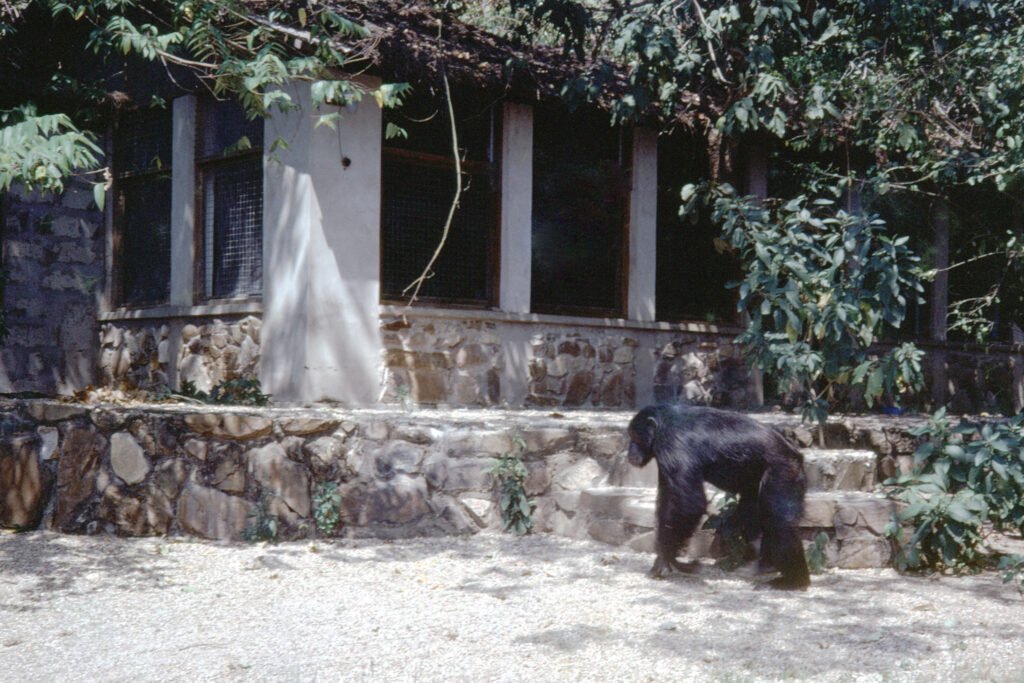
Figan stands in front of the Mess, a sturdy building with a concrete floor, stone and cinder-block walls, chain-link windows, and a wooden A-frame roof covered with corrugated metal and thatch.
Around sunset, students began trickling in, mostly fellow undergraduates from Stanford. We also met two delightful graduate students from the University of Edinburgh: Caroline Tutin, who was finishing her research on chimpanzees, and Anthony Collins, who had started a long-term study of baboons. (How long? He’s still at Gombe 52 years later!)
The students greeted one another with big smiles and hugs, as if they hadn’t seen each other in weeks instead of just a few hours. And they went out of their way to make Grant, Kit, and me feel welcome.
Just as everyone was sitting down, in walked Jane Goodall with her signature ponytail.
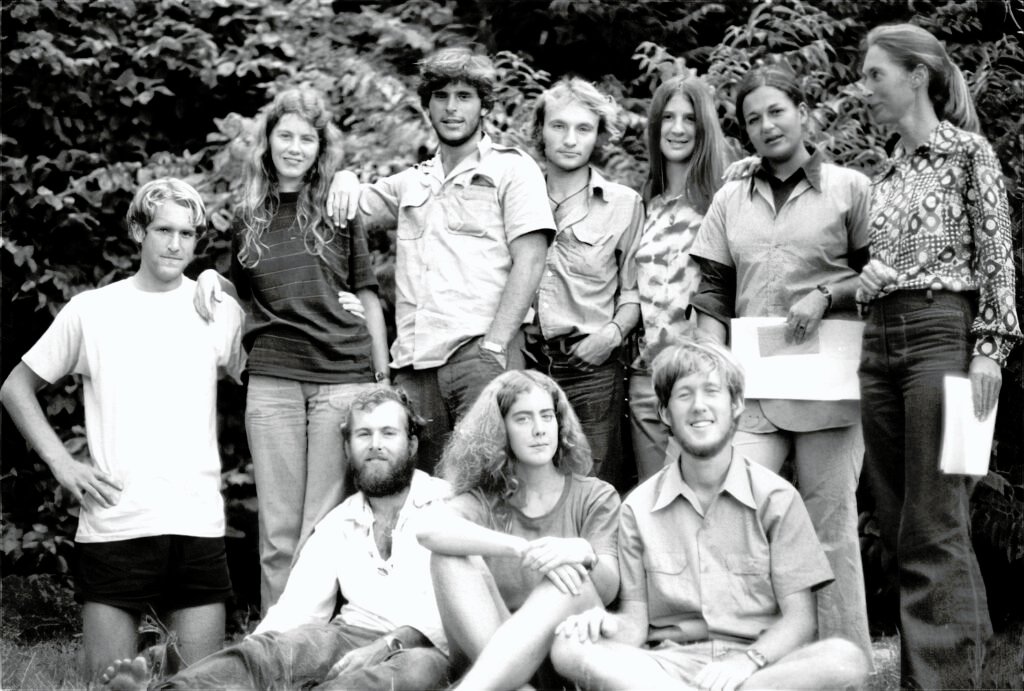
January 26, 1974. Back, L-R: Curt Busse, Caroline Tutin, Grant Heidrich, Anthony Collins, Julie Johnson, Emilie van Zinnicq Bergmann, Jane Goodall. Front: Jim Moore, Lisa Nowell, John Crocker. Missing: Kit Morris and Sara Simpson, who were following chimpanzees (photo courtesy of Emilie).
I had met Jane previously in California, but now I was on her home turf in Africa, precisely where she had made her groundbreaking discoveries. By 1974, she was already a worldwide celebrity.
Jane greeted us three newcomers with hugs, then settled into a seat adjacent to the head of the table. In her khaki shorts and shirt, she looked completely at ease in these surroundings.
Godi
The dinner conversation began with Jane asking for any news about a chimpanzee named Godi.
Caroline said she had sent two staff members to search the Kahama Valley all day, but they had turned up nothing. None of it meant anything to me yet, but Jane was clearly worried.
I would soon learn what had happened a few days before my arrival.
A group of adult male chimpanzees from Jane’s primary study community, Kasakela, had traveled deep into the territory of the neighboring community, Kahama, surprised an adult male named Godi, and attacked him mercilessly.
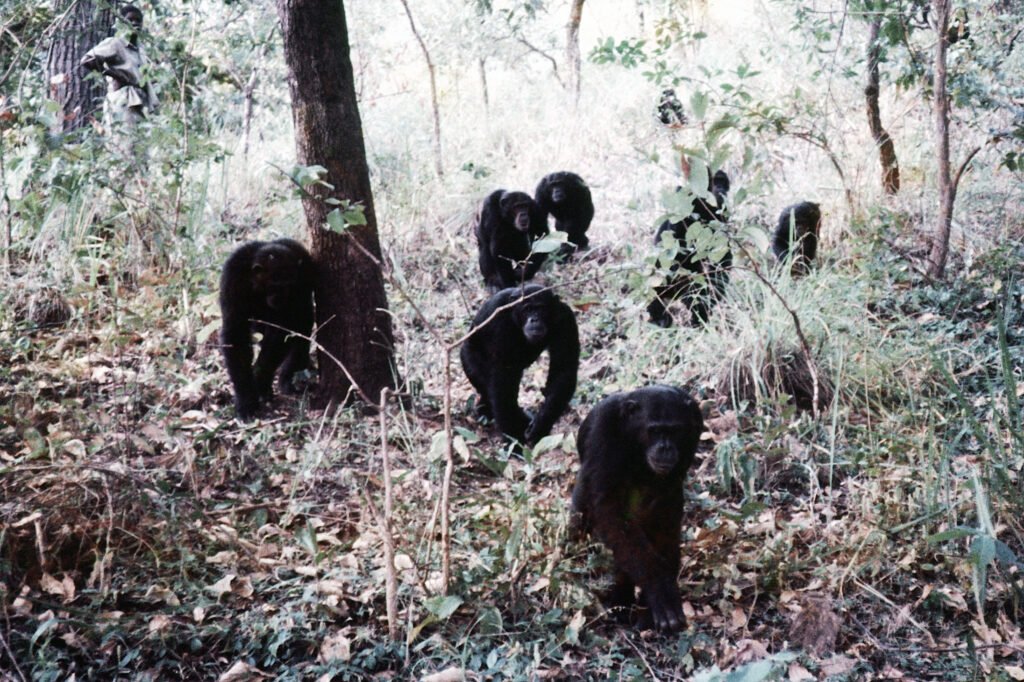
Sherry leads a group of Kasakela marauders on a patrol deep into Kahama territory on Day 38 of the Figan Follow.
Territorial patrols had been seen before, and in 1971 a mother from another community had been attacked and her infant killed. But this was the first time an adult male had been targeted so viciously.
What made it stranger still was that the two communities, Kasakela and Kahama, had split apart only recently. Just a few years earlier, Godi had been living peacefully alongside the very males who now attacked him.
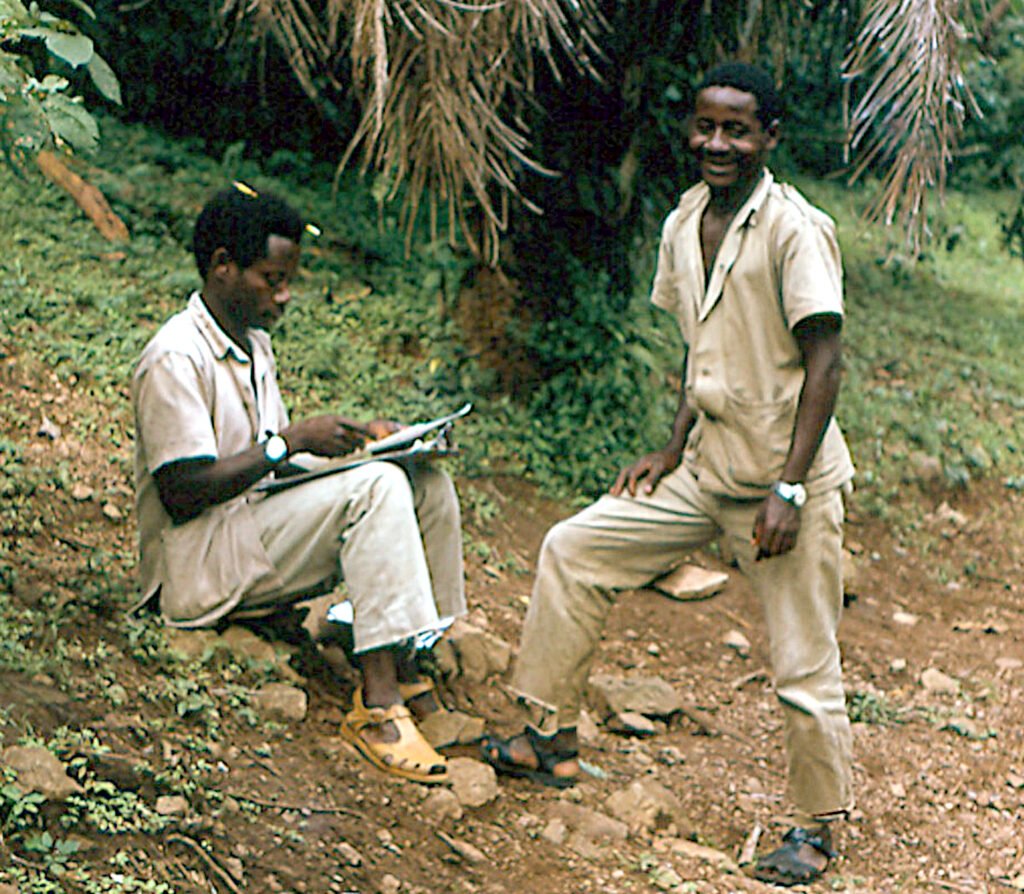
Hilali Matama and Yassini Selemani witnessed the attack on Godi (photo courtesy of Larry Goldman).
Jane asked Caroline to keep the staff searching. For now this was just an isolated incident, but she was troubled. Male chimpanzees scuffled all the time, but it was mostly bluff. Brutal attacks and serious injuries like this were almost unheard of.
Jane had even been quoted as saying that “chimpanzees were rather nicer than humans.”
The Whisky Bottle
Then the conversation shifted abruptly, to something equally bizarre, though considerably less serious.
One of the students asked Julie Johnson about “the whisky bottle.”
“Nothing new,” she answered, with a sigh of resignation.
“I think it’s time we seriously think about digging up that choo,” said Anthony with a grin.
I had just learned that choo was Swahili for the long-drop latrine. None of this made any sense yet.
A comedy of errors had begun with Julie staying at Jane’s house on the beach for a few days while Jane was away. With Jane’s imminent return, Julie placed her belongings, including a new whisky bottle, into a basket and carried it to her hut up in the forest.
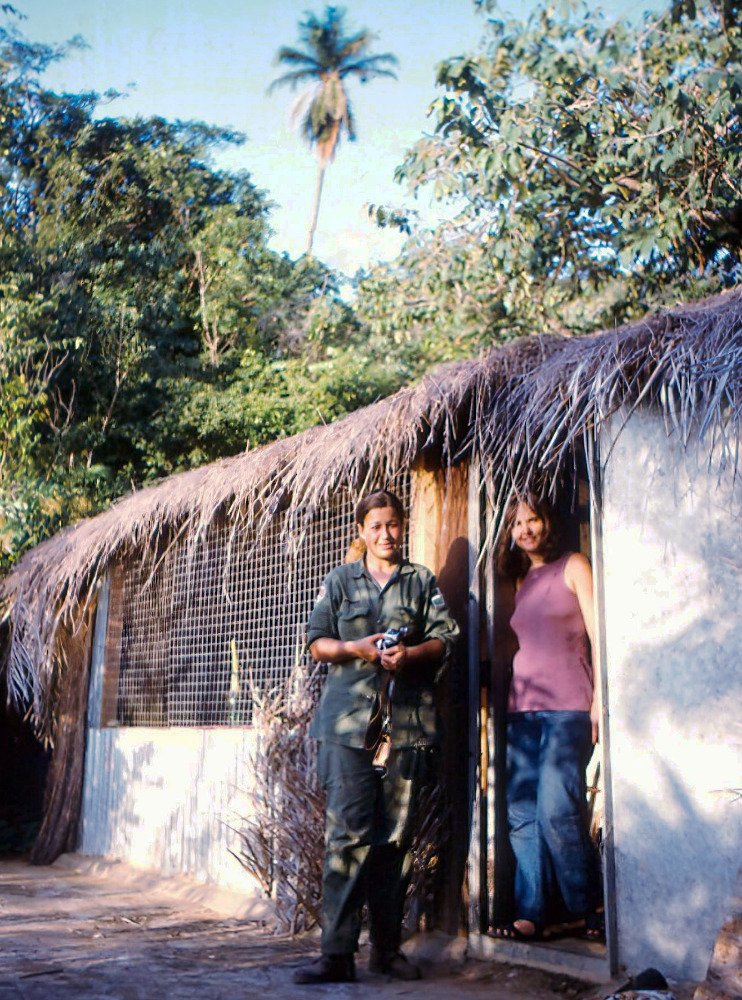
Emilie and Helen Goldman stand at the doorway of one of the (largest) student rodavels scattered throughout the hillside behind the Mess (photo courtesy of Larry Goldman).
While tidying up her hut, she filled the basket with trash, unaware that the whisky bottle was still sitting at the bottom. She emptied the basket into the nearby choo, and later realized that the whisky bottle was missing.
Retracing her steps, she discovered with horror that the whisky bottle was lying at the bottom of the deepest choo at Gombe.
So the dinner conversation on my first night at Gombe had opened with a brief discussion of a missing chimpanzee, then pivoted to a prolonged brainstorming session on how to rescue a whisky bottle that had spent the past six days partially submerged in the choo. Whisky, it seemed, was like gold at Gombe.
One suggestion — from a student who shall remain anonymous — was to tie a rope around young Grub’s ankles and lower him headfirst into the latrine to grab the bottle.
This got some initial laughs, but Jane’s rare scowl abruptly torpedoed the idea.
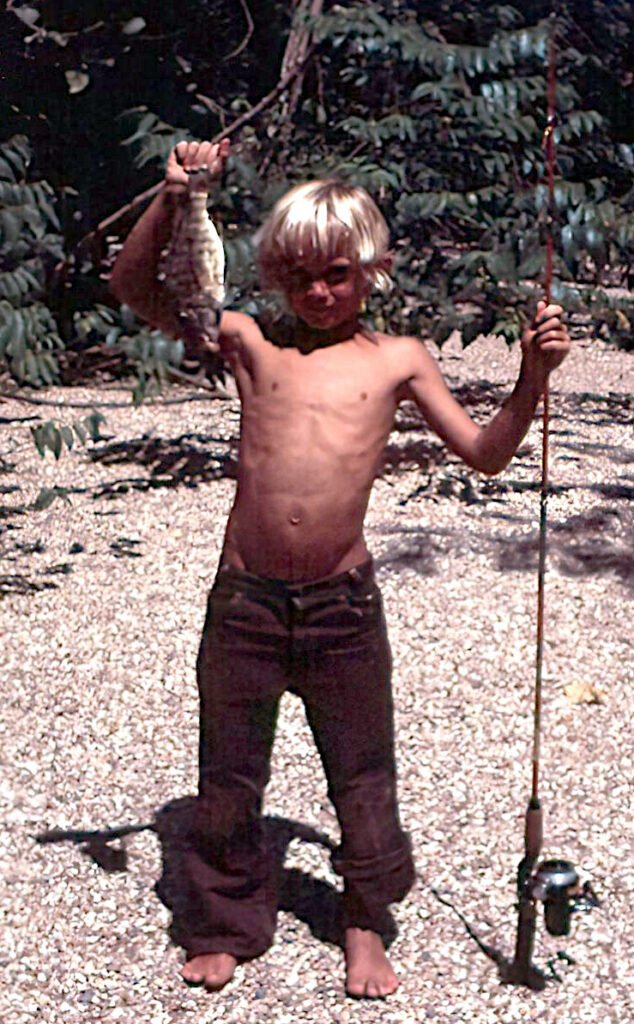
Young Grub (age 7) loved to fish along the lakefront (photo courtesy of Larry Goldman).
The whisky bottle remained a prime dinner topic for the better part of a week. Jane joined us for dinner once or twice, but mostly she stayed at her house, answering letters, writing papers and grant proposals, and spending time with Grub — who surely had no idea he had been volunteered for a crazy mission.
Meanwhile, poor Godi was never found and was presumed dead from his wounds.
The Rescue
On January 17, a determined and inspired Jim Moore and Caroline Tutin borrowed Grub’s fishing pole, carried it up to the latrine, tied a slipknot at the end of the line, lassoed the neck of the bottle, and triumphantly reeled it up.
They wrapped their putrid prize in layers of toilet paper and carried it down to the office where Julie was sitting.
When Jim revealed what was hidden in the white wrapping, Julie shouted with joy.
The three of them cleaned and sanitized the bottle thoroughly, then performed the crucial test: twisting open the cap and hearing that satisfying crack that confirmed the contents had survived twelve days in the choo, uncontaminated.
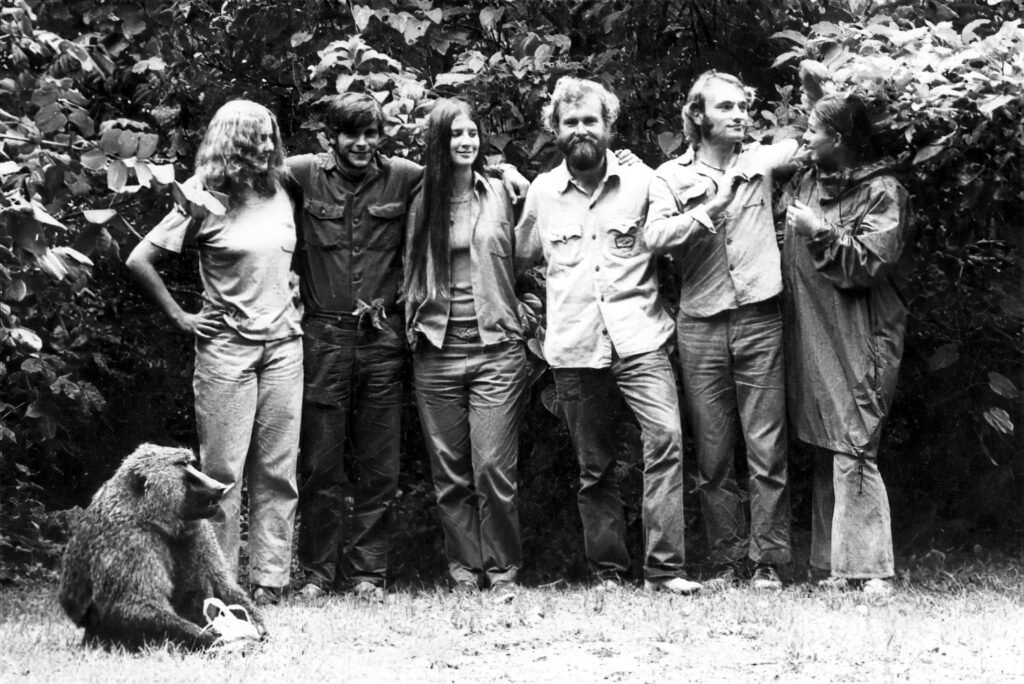
The mafundi wa nyanyi (baboon researchers): Lisa Nowell, Grant Heidrich, Julie Johnson, Jim Moore, Anthony Collins, Emilie van Zinnicq Bergmann. Crease sits in the foreground (photo courtesy of Emilie).
Dinner that night was electric. News of the rescued bottle had spread fast. Jane joined us, but we waited for her to leave before the real celebration began.
With a cassette of Lou Reed’s album “Transformer” playing in the background, Julie said a few words of gratitude before opening the bottle to wild applause. She raised the bottle dramatically to her lips and savored the first sip. Then she handed the bottle to Jim. It went around the room, student to student, everyone drinking straight from the bottle.
After a few rounds, it was empty.
Interestingly, Jane would later become a whisky connoisseur herself, taking a “wee dram” each evening at 7 pm in honor of distant friends and family, and departed loved ones. Later in life, she would often have a sip before a lecture, to loosen the vocal cords.
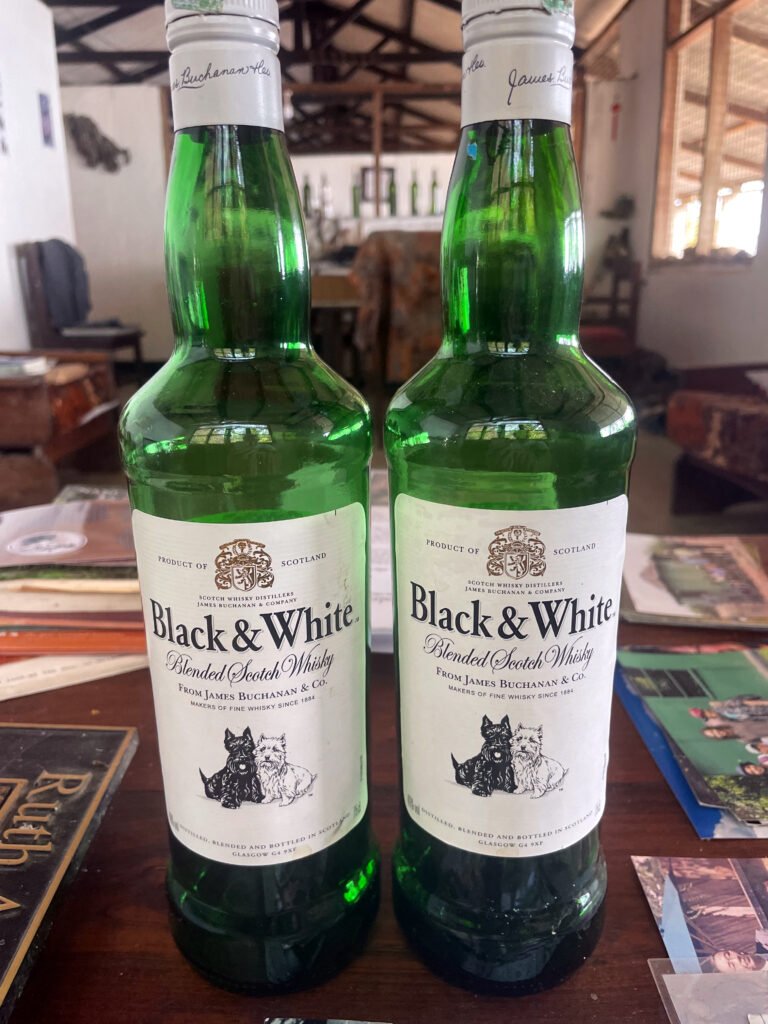
The brand of whisky from the choo incident is usually remembered as Black & White, but Julie maintains that it was actually Vat 69.
The drama of the whisky bottle became one of the defining stories from Gombe in the early 1970s, told in detail in Jane’s biography by Dale Peterson.1 Jane even drew a cartoon of the incident: Julie in full snorkel gear, sitting on a tall stool at the bottom of the choo, clutching a bottle of Black and White whisky, with a candle on a pile of dung and flies buzzing all around (Julie still has the original artwork).
The Conflict Continues
I adapted well to my first few weeks of following the chimpanzees through the forest, despite having arrived during the peak of the rainy season.
Then, on February 26, came another shocking attack.
On that day I was scheduled to follow the adult male chimpanzee Sherry, but at the last minute I switched to the adolescent male, Goblin. I had the presence of mind to coordinate with two of Jane’s field assistants, Esilom and Adriano, to follow Sherry in my place.
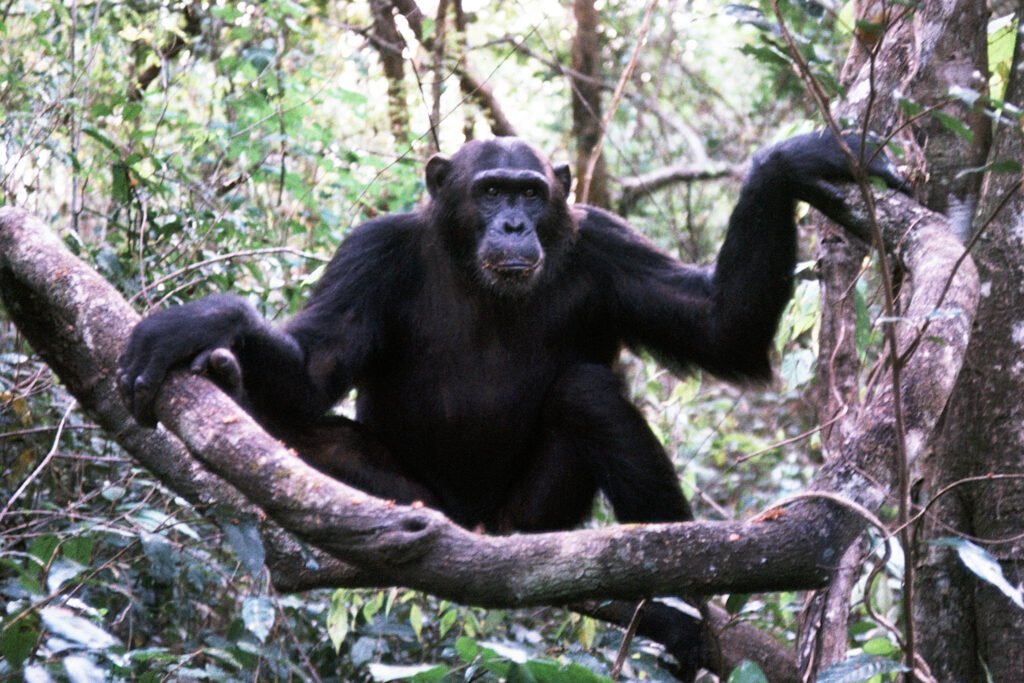
Sherry (age 13).
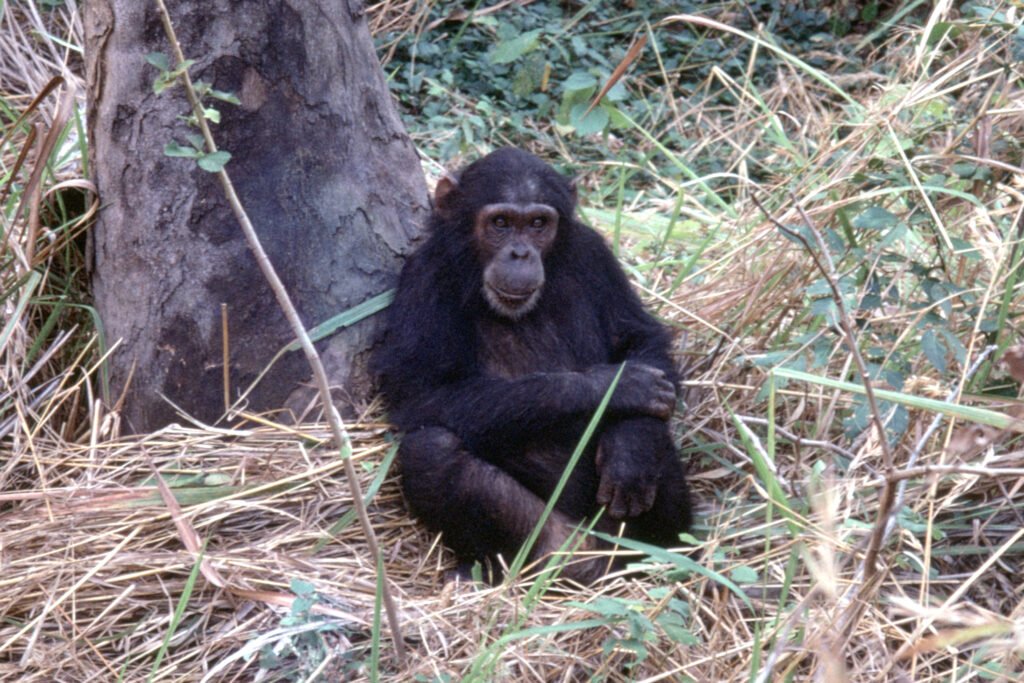
Goblin (age 10).
They tracked Sherry and three other Kasakela chimps south to Mkenke Valley, where the group surprised a Kahama male named Dé and attacked him savagely.
It was the second attack in what would later be called the “four-year war,” occurring just seven weeks after the attack on Godi. Dé was spotted a couple of weeks later, severely emaciated. He was never seen after that.
My decision not to follow Sherry cost me a front-row seat to history — and spared me from witnessing the violence.
A year later, in February 1975, another Kahama male was killed: Goliath, once the alpha of the Kasakela community when Jane first arrived in 1960. During the community’s fission between 1971 and 1973, he had joined the newly formed Kahama group.
Emilie and Adriano witnessed the sad and savage attack on old Goliath. Emilie, who had recently switched duties from administrator to chimpanzee tracker, would be the only foreign researcher to witness one of the attacks.
One by one, members of the Kahama community were eliminated. In time, the community ceased to exist.
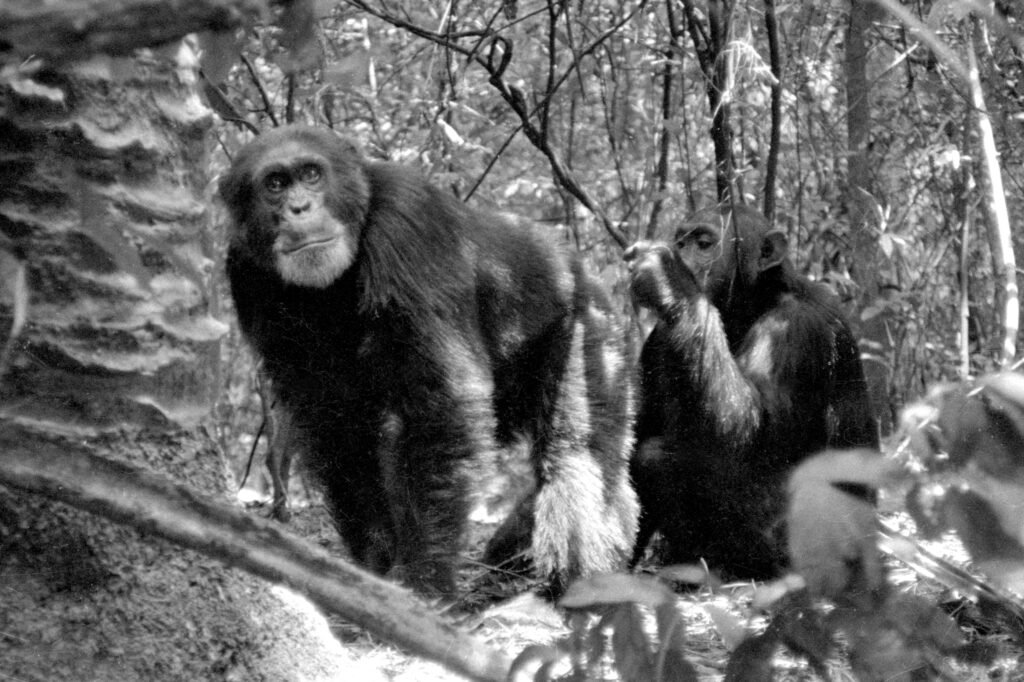
Charlie (left) was alpha male of the Kahama community. He and Hugh led the gradual split from Kasakela between 1971 and 1973. Charlie and Sniff (right) would be among the last survivors of the Kahama community.
What I Didn’t Know
But that is only two-thirds of the story of events surrounding my arrival.
January 5 was the whisky bottle incident. January 7 was the attack on Godi.
And in between, on the morning of January 6, Julie, Anthony, and Lisa Nowell had boarded the park’s motorboat to go to Kigoma to collect Jane and Grub, who were arriving that day on a small plane.
A mile into the boat ride, while passing the ranger station at Nyasanga Valley, the rangers flagged them down.
They had just received word over the radio: Jane’s plane had crashed at Ruaha National Park in central Tanzania.
As more details emerged, it became clear that no one had been seriously hurt. The plane — a small Cessna carrying Jane, Grub, and Derek Bryceson, Director of Tanzania National Parks — had been on approach to a dirt airstrip at Ruaha when a group of zebras wandered onto the strip.
The pilot panicked and put the plane down in the woods on the other side of the river. The aircraft was totaled. Derek had a couple of cracked ribs, but that was the only injury.
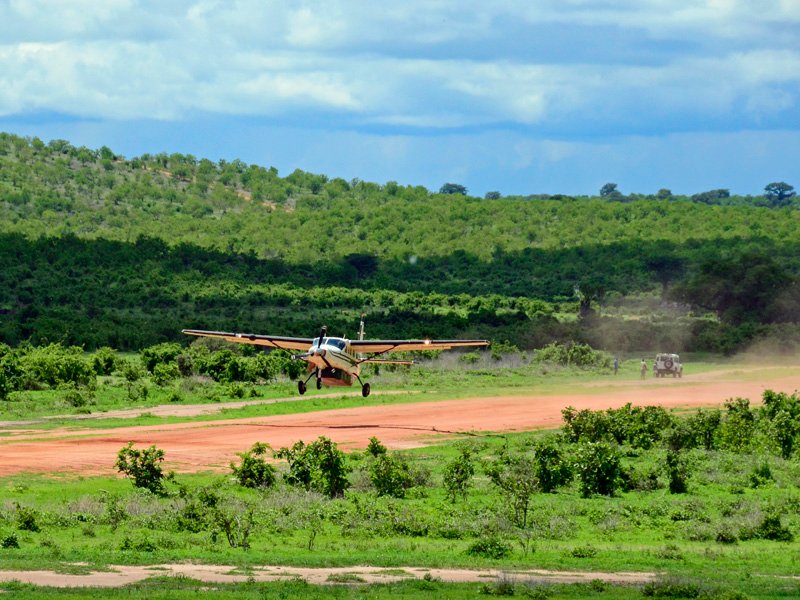
Msembe airstrip at Ruaha, 2011. © Ulf Rydin Creative Commons (no changes made).
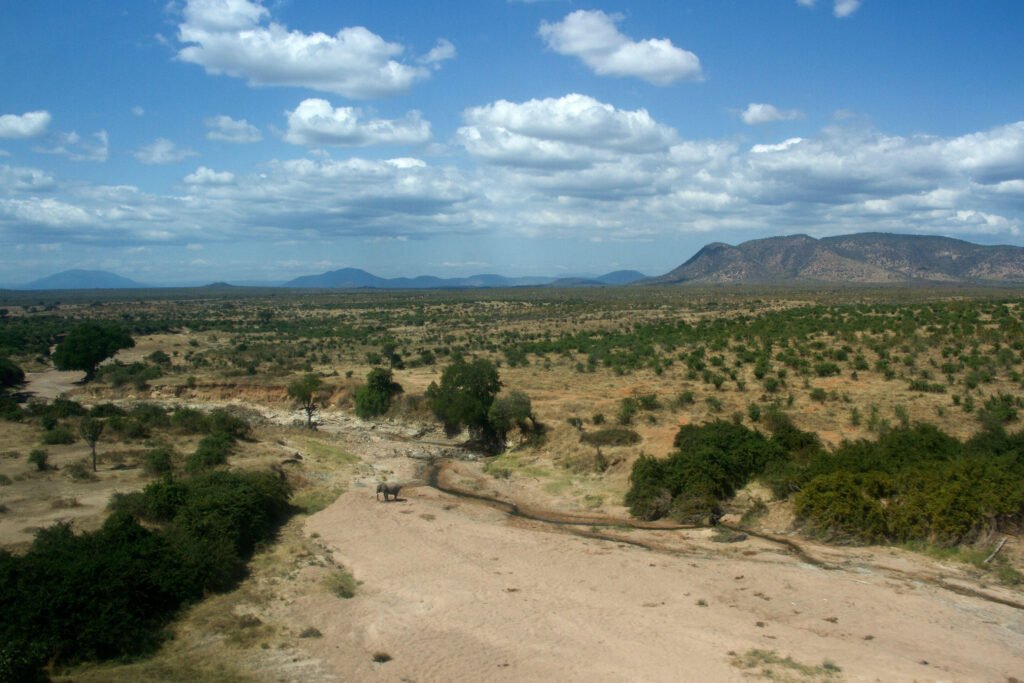
An elephant stands at the far western end of the Ruaha airstrip. The pilot crash-landed the plane in semi-open woodland on the other side of the river. © Nick Greaves / Alamy Stock Photo
When Grant, Kit, and I arrived at Gombe, Jane had returned from the harrowing crash only a couple of days before.
That first night at the dinner table — listening to news of the attack on Godi and schemes to rescue the whisky bottle — I had no idea that Jane had just survived a plane crash. At the time, she appeared totally relaxed, but Jane kept her private life to herself. Completely understandable.
I would not learn about the crash until twenty-five years later, reading Jane’s book Reason for Hope. When I saw the date of the crash — January 6, 1974 — I was floored.
I also learned that the day after the crash, while Jane and Derek were still at Ruaha — and while a gang of Kasakela chimpanzees was attacking Godi — Derek proposed to Jane, and she accepted.
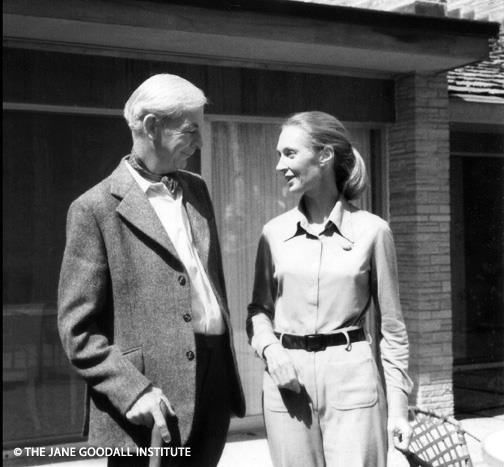
Derek and Jane
Both were married at the time, but Jane’s husband Hugo agreed to a divorce, and the two remained friends until his death in 2002.
Looking Back
By pure chance, I arrived at Gombe at a pivotal moment.
It was a time of genuine camaraderie among the students, captured perfectly in the drama and triumph of the whisky bottle.
It was a period of personal upheaval for Jane: a terrifying plane crash, a divorce, and the beginning of a new chapter of her life with Derek.
And most significant of all, it marked the beginning of the “four-year war” and the end of the belief that chimpanzees were, as Jane once said, “rather nicer than humans.”
I had stepped off the water taxi into three stories already in motion. I just didn’t know it yet.
Curt Busse
May, 2026
- Pages 525-26 in: Dale Peterson, Jane Goodall: The Woman Who Redefined Man (Boston: Houghton Mifflin, 2006). ↩︎