
Maps of the Okavango Baboon Study Site
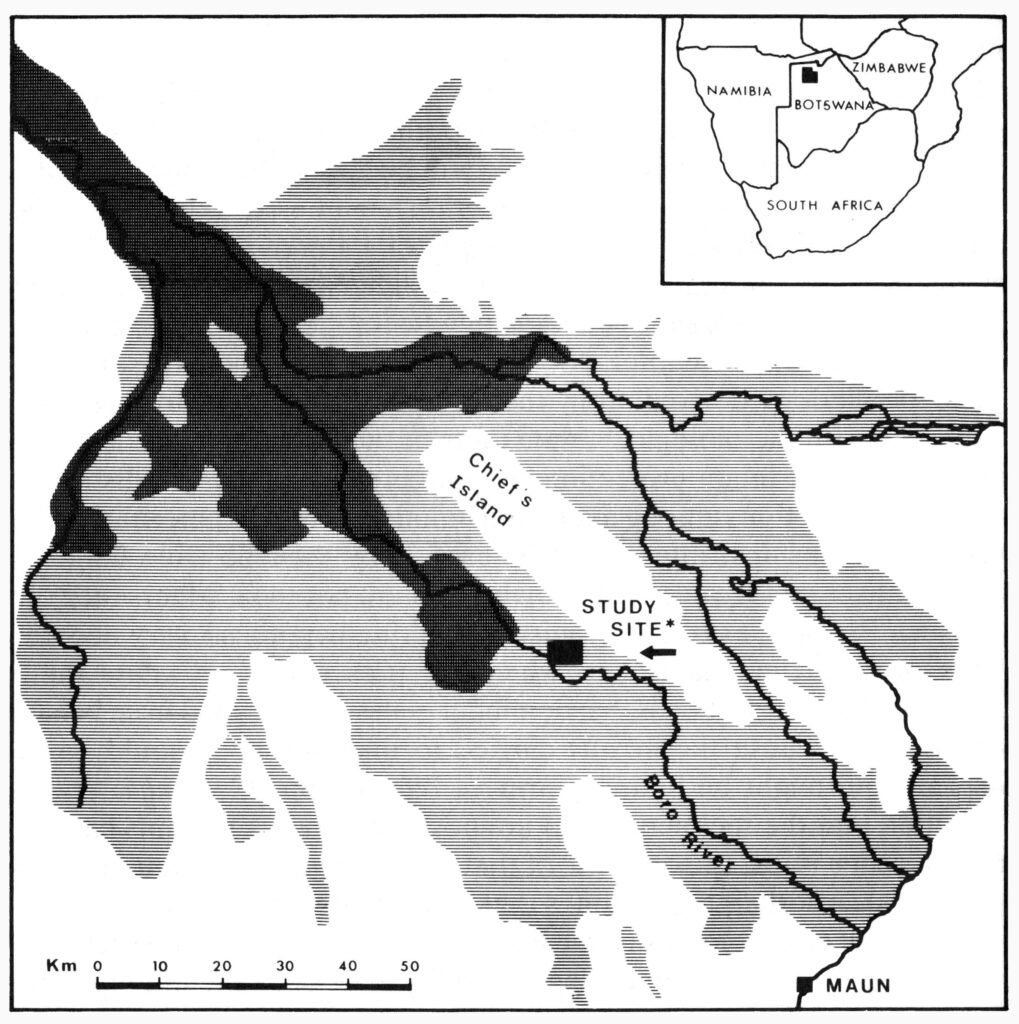
Figure 1. Map of the Okavango Delta, Botswana, showing the location of the study site. Dark shading indicates perennial flooding; light shading indicates seasonal flooding (* see Figure 2 for an enlargement of the study site).
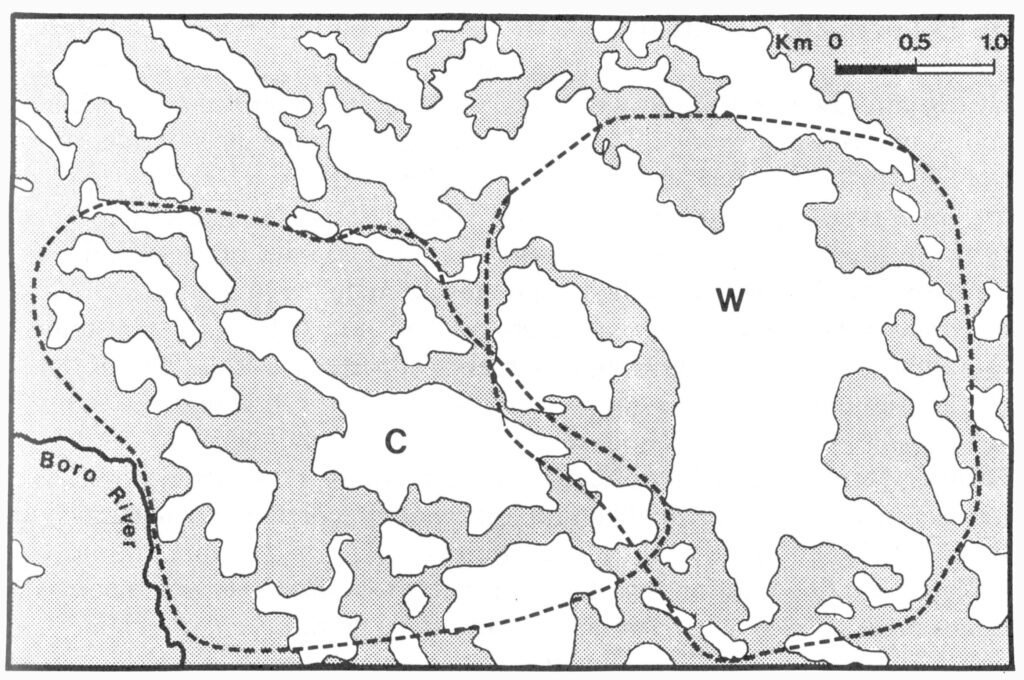
Figure 2. Map of the study site, showing approximate home ranges of C Troop and W Troop. Shaded areas are seasonally flooded; open areas are permanently dry. Baboon Camp is along the Boro River.
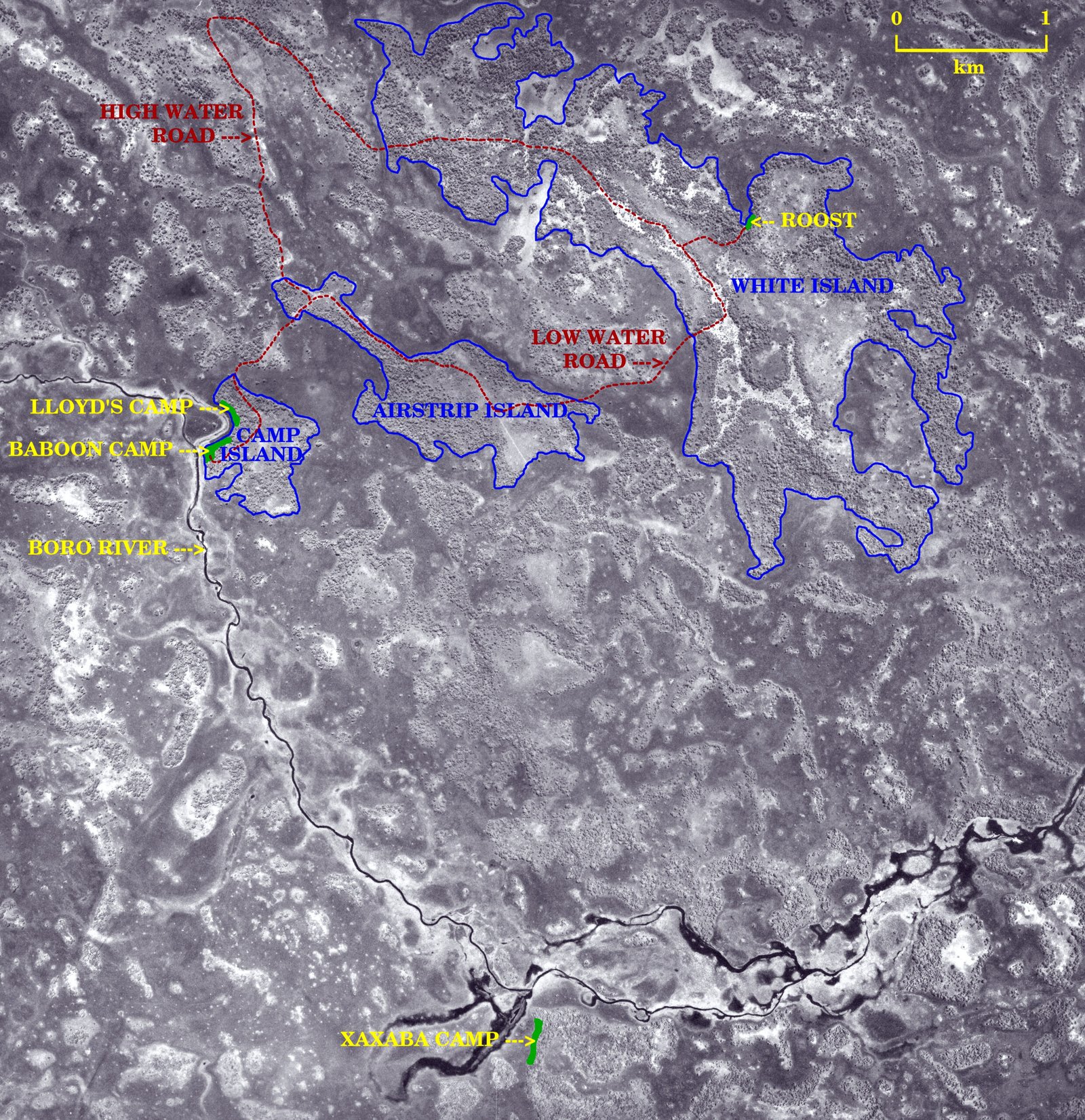
Figure 3. Aerial photo showing landmarks including Baboon Camp, Xaxaba Camp (bottom), and the White Island baboon roost. The areas outlined in blue are the largest “islands” used by the two baboon groups. The darker areas of the photo are seasonally flooded. 
This photo (#2991) is part of a 1973 aerial survey of Northern Botswana. The area shown is 4.4 x 4.4 miles. Here is the unedited map .
I thank Rabindra Das and the Director, Department of Surveys and Mapping, Government of Botswana for kindly permitting me to post this photo here. Copyright © Department of Surveys and Mapping, 1973.
Note 1. Lloyd Wilmot named “White Island” after the conspicuous strip of sand running down its center. Lloyd relocated his camp to Xaxaba in 1975 when the Moremi Wildlife Reserve was expanded to the Boro River. The camp was then owned and operated by Lloyd’s sister Joyce and her husband P. J. Bestelink, who were indispensible in helping us establish the Baboon Camp. (P. J. gets credit for naming “Baboon Camp.”)
Note 2. I always carried a copy of this photo while watching the baboons in order to map their travel movements and to keep my bearings.
Note 3. The original photograph measures 25 x 26 inches. I scanned it in six sections and reassembled the digital version using The Gimp.