
The home range of the White Island baboons (W Troop) lay almost entirely on White Island (aerial photos, here). As a result, water crossings were rarely necessary, although the troop did forage in shallow floodplains at certain times of the year.
In contrast, the Camp Troop baboons (C Troop) ranged across several smaller islands, often requiring them to cross floodplains up to three feet deep during the flood season (typically April–September). Water temperatures at this time of year can average around 18–22°C (64–72°F).
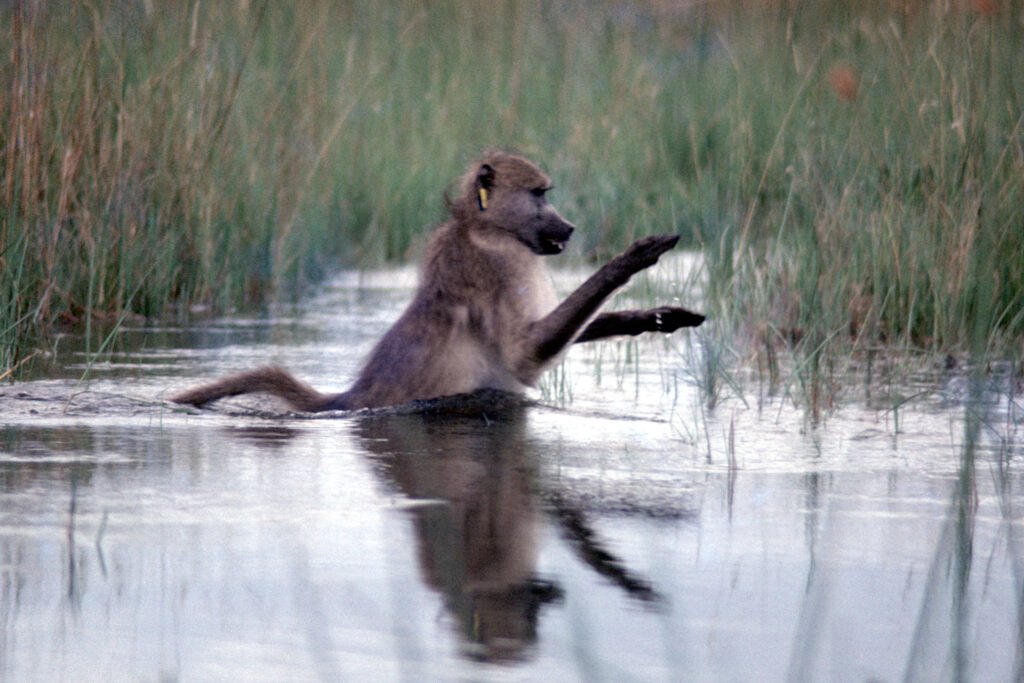
All of the photos on this page show C Troop baboons crossing a 60-yard-wide floodplain at the northwest corner of Camp Island. Before entering the water, they typically sat and watched for up to an hour — likely scanning for nearby crocodiles or lions on the opposite side lying in ambush.
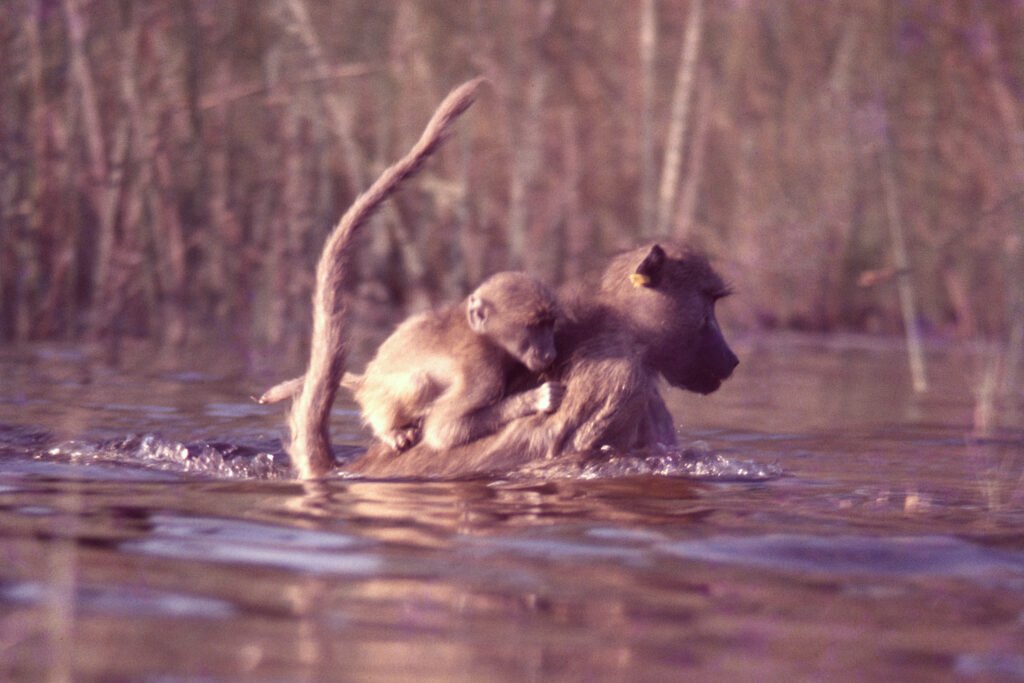
For several of these photos I sat chest deep in the water. The baboons, even the mothers carrying infants, showed no apparent concern at my presence during this potentially hazardous crossing. 
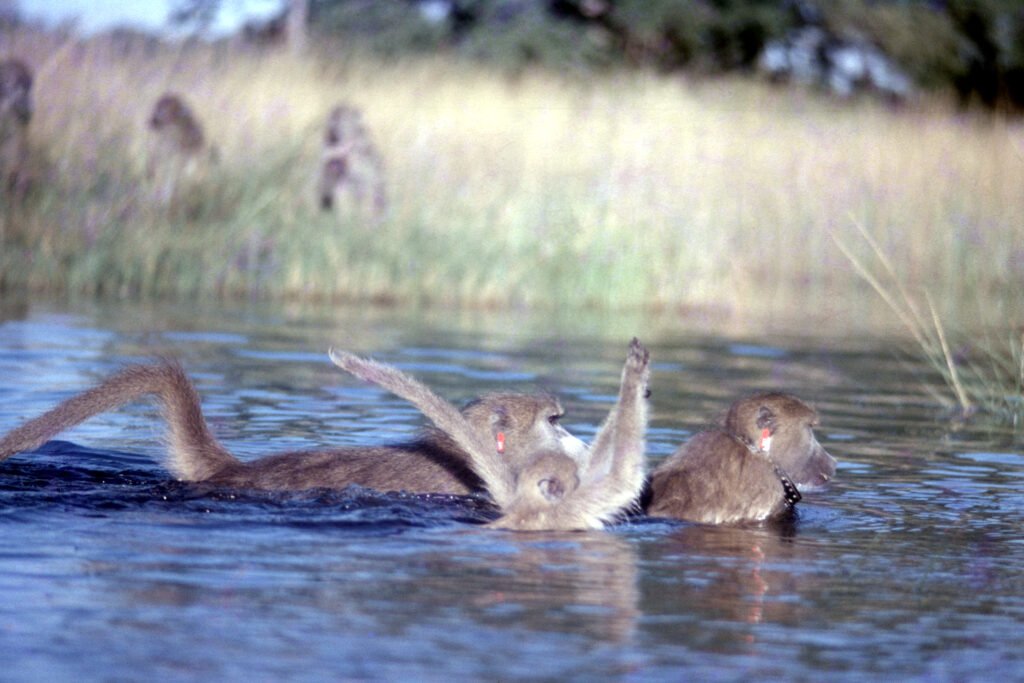
A majority of my photos, like the one above, were taken with Kodachrome film, which produced richer colors. Compare with the photo to the left, taken with Ektachrome film.
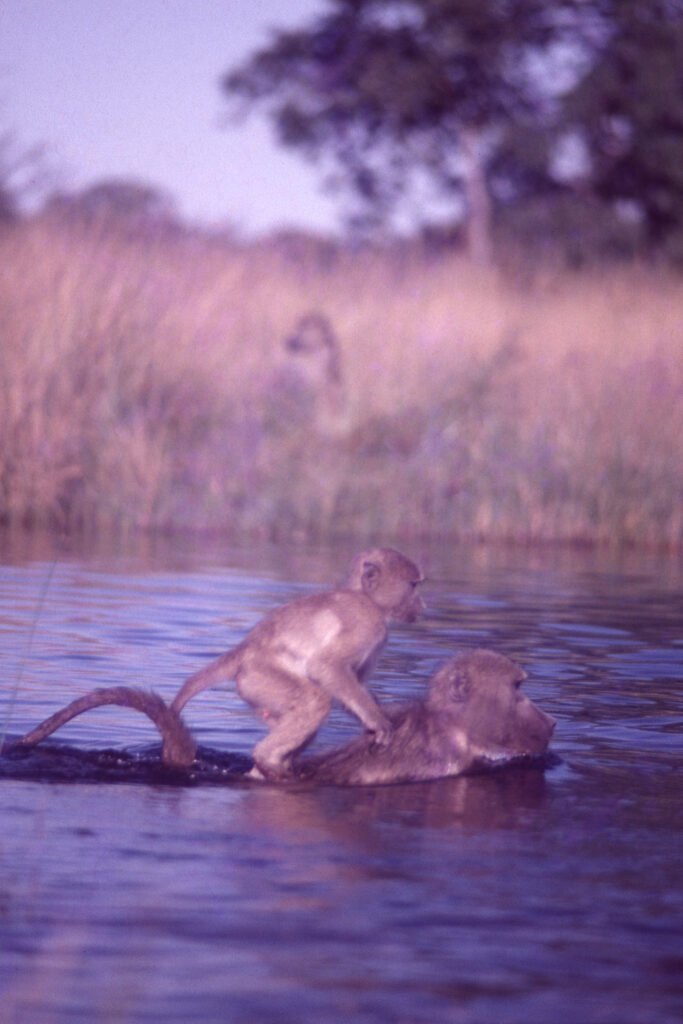
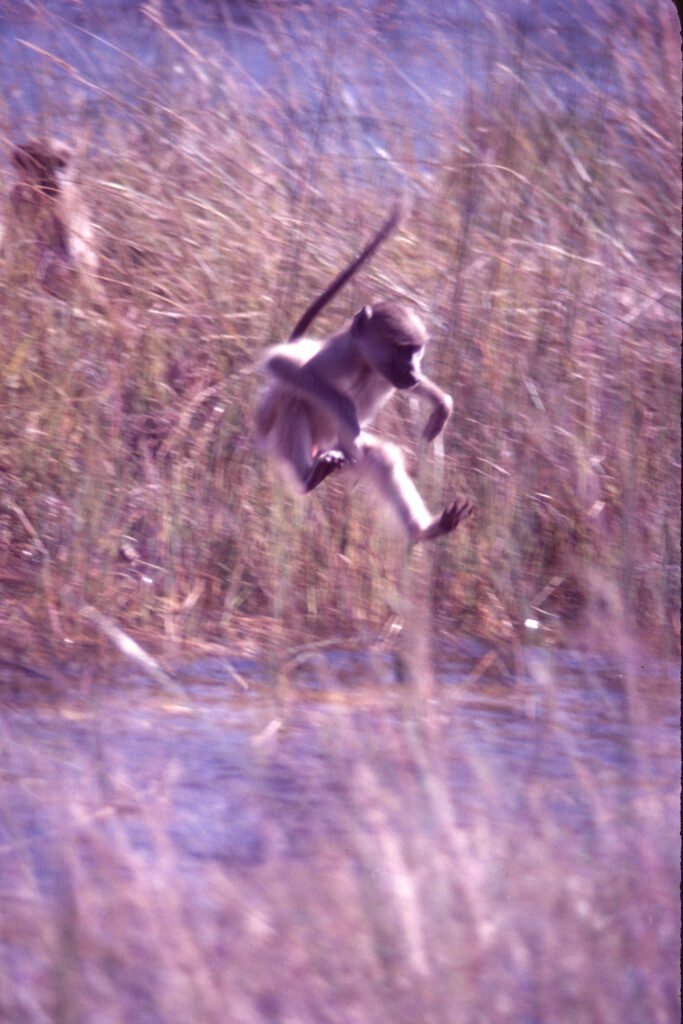
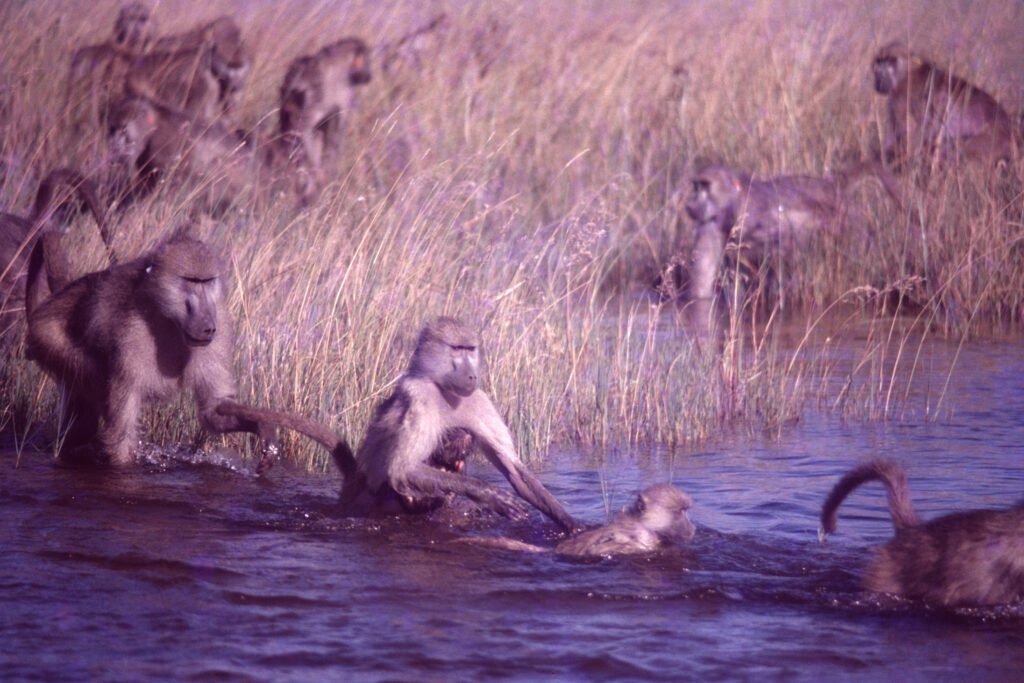
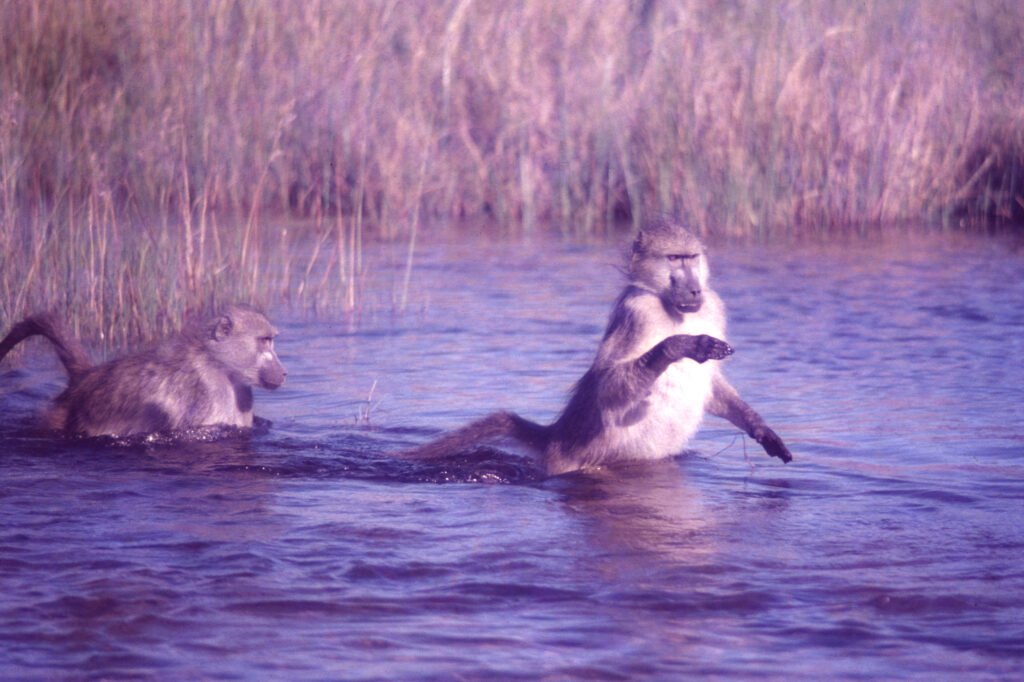
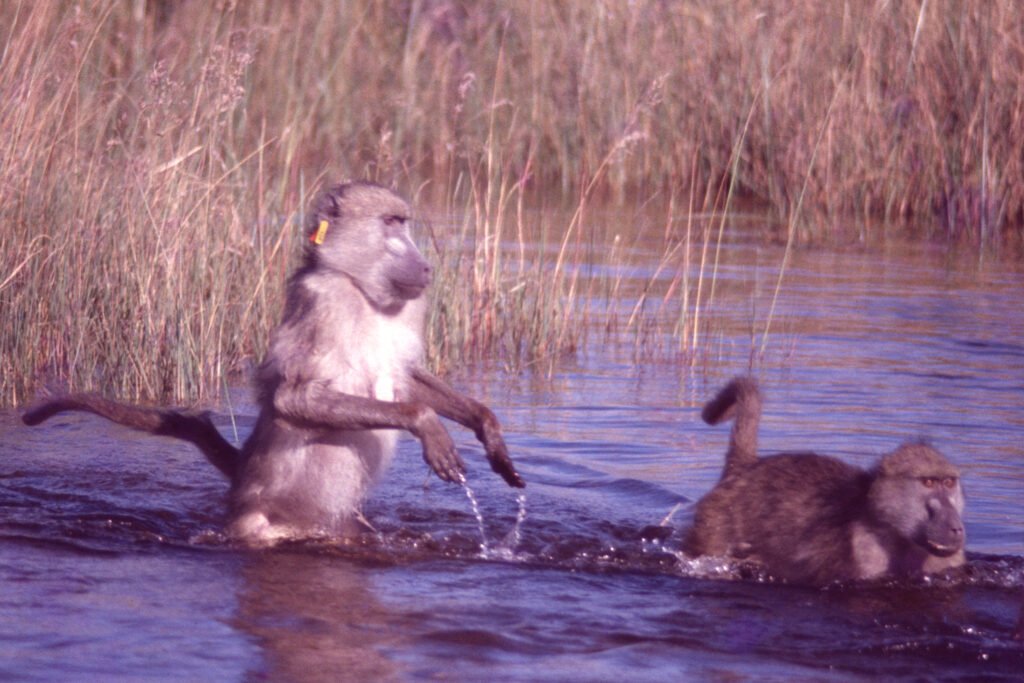
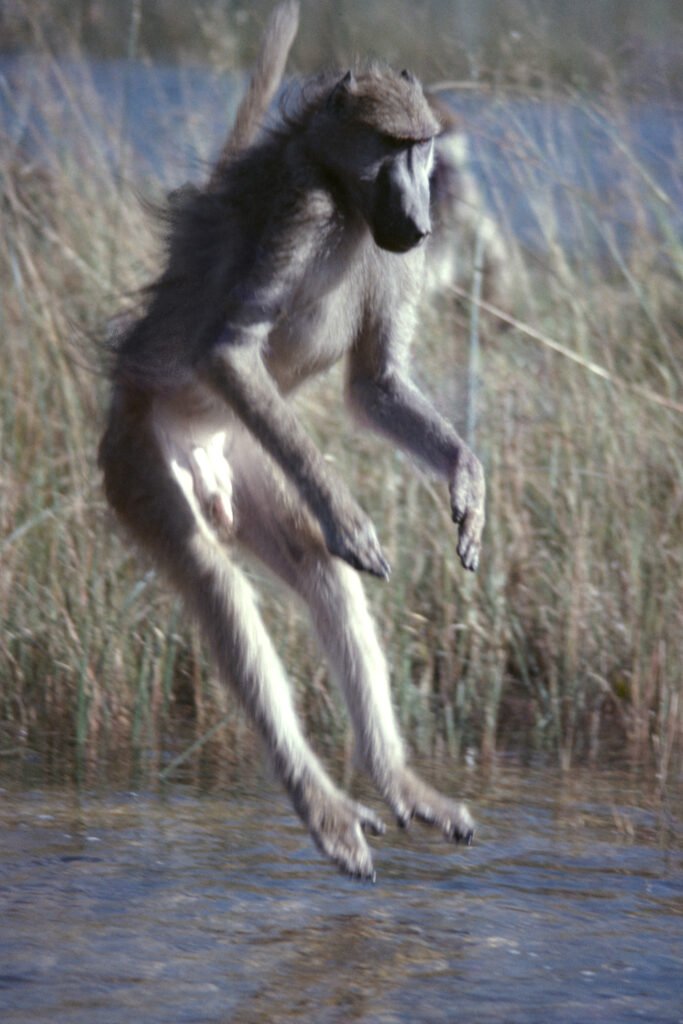
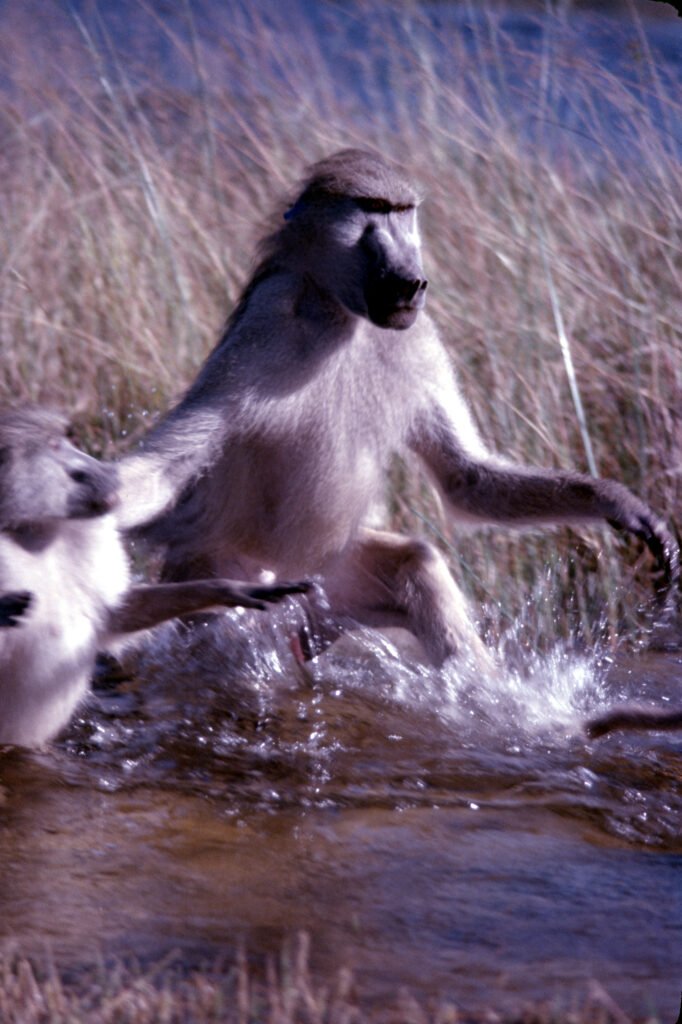
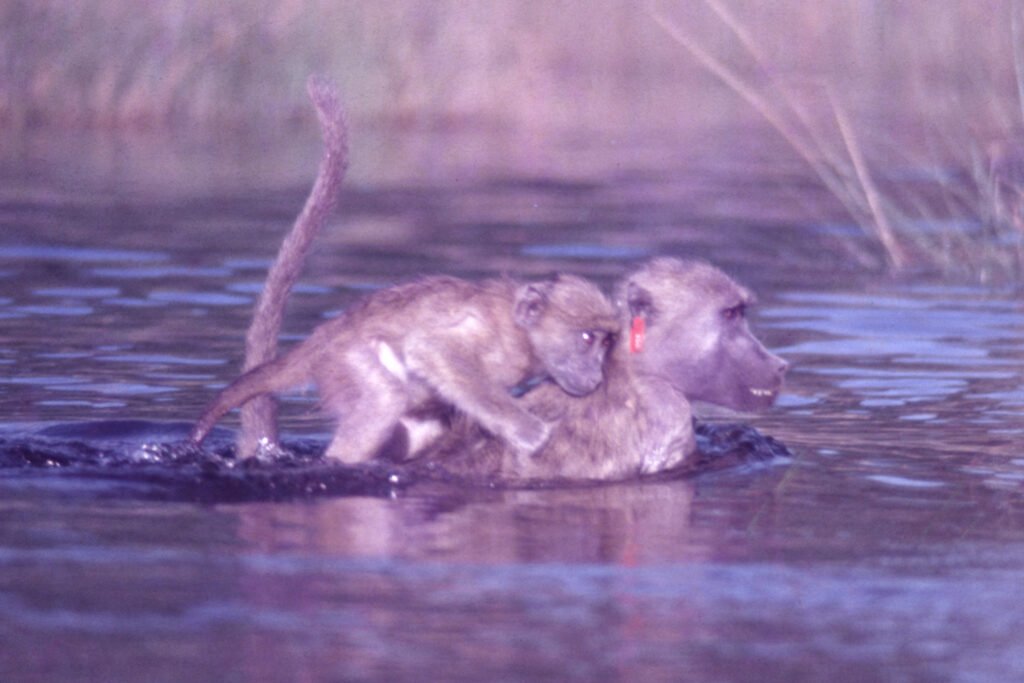
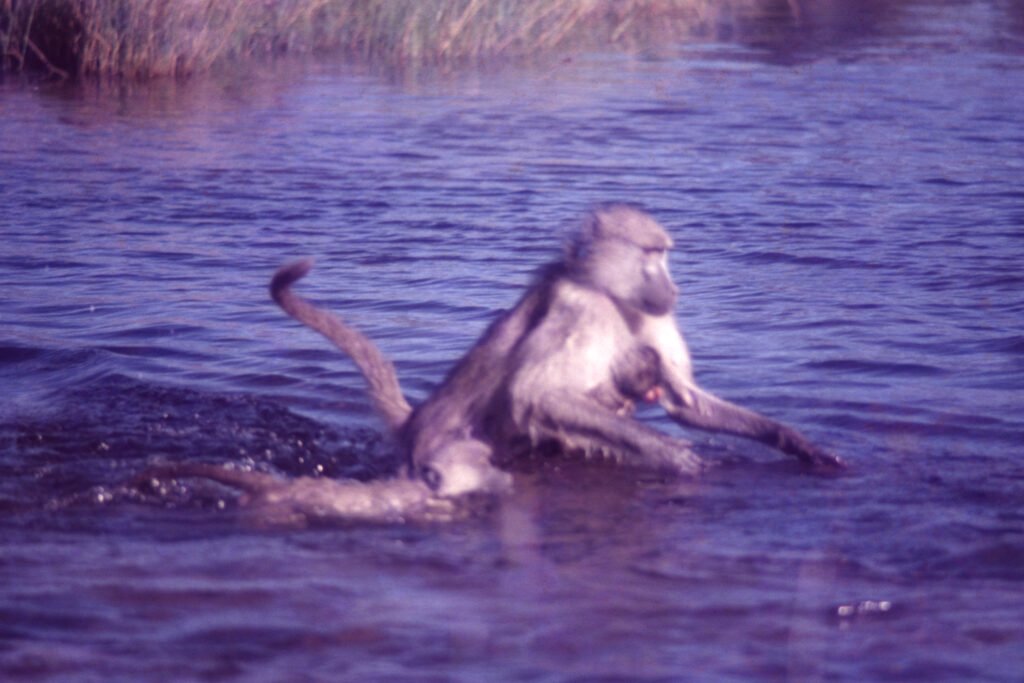
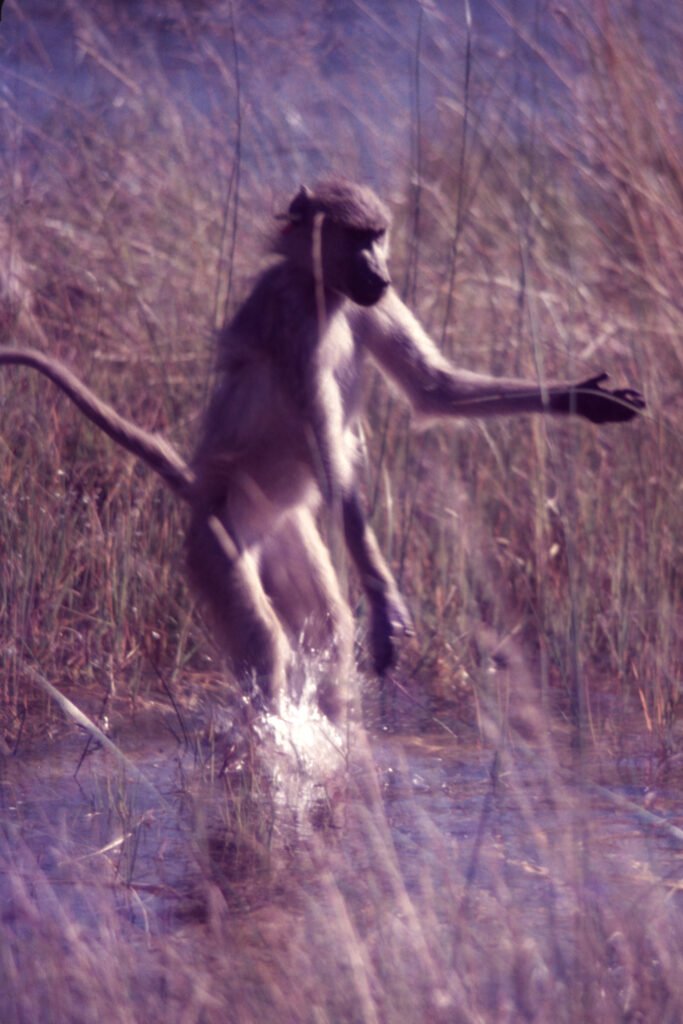
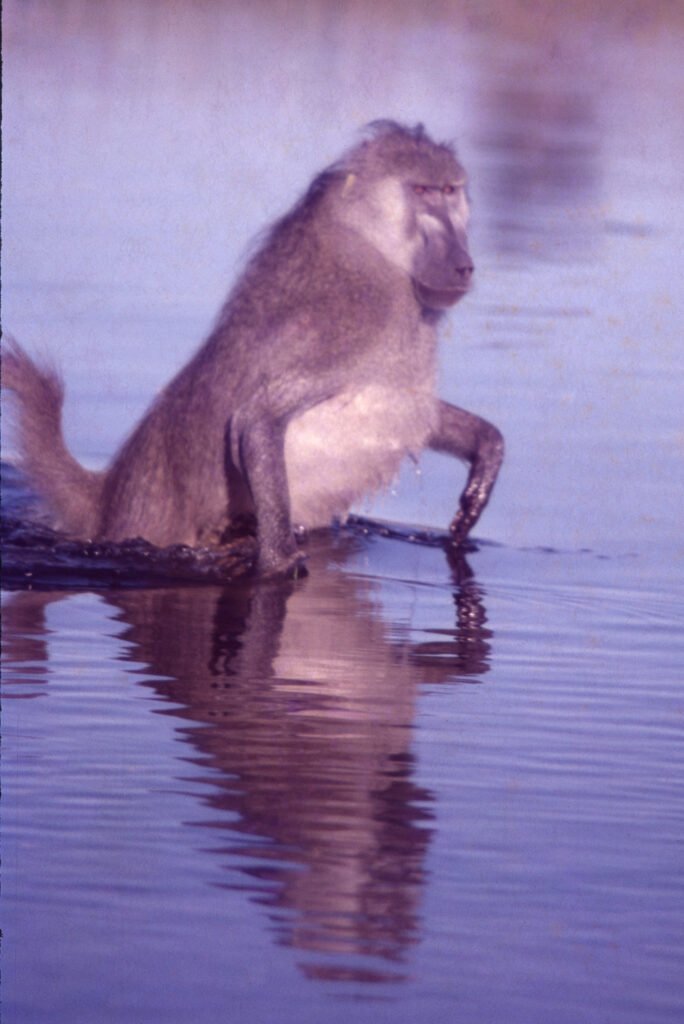
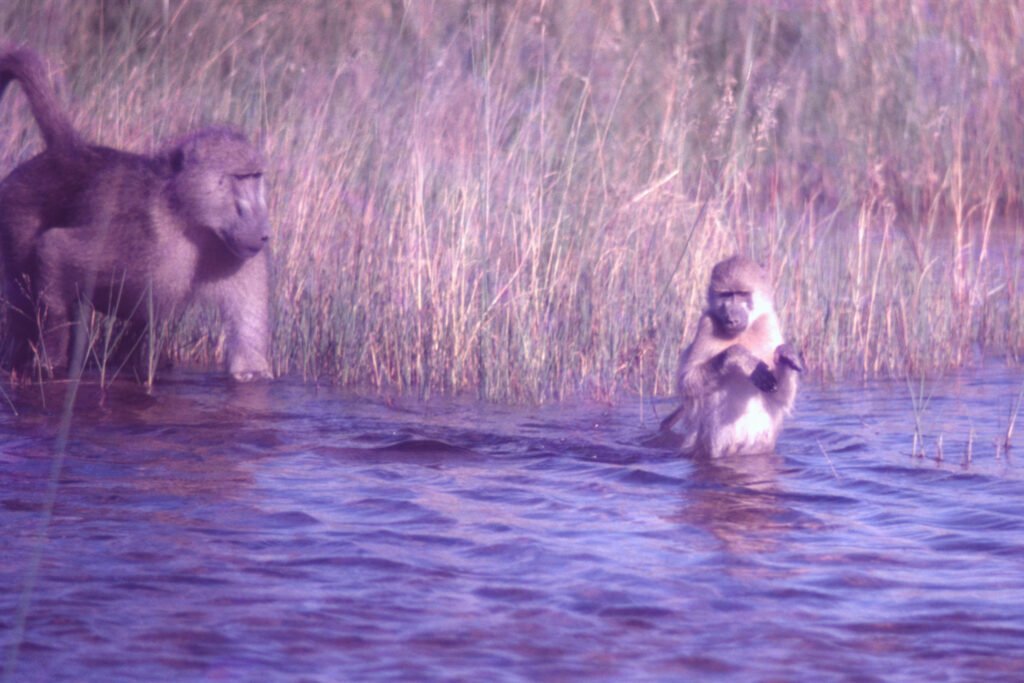
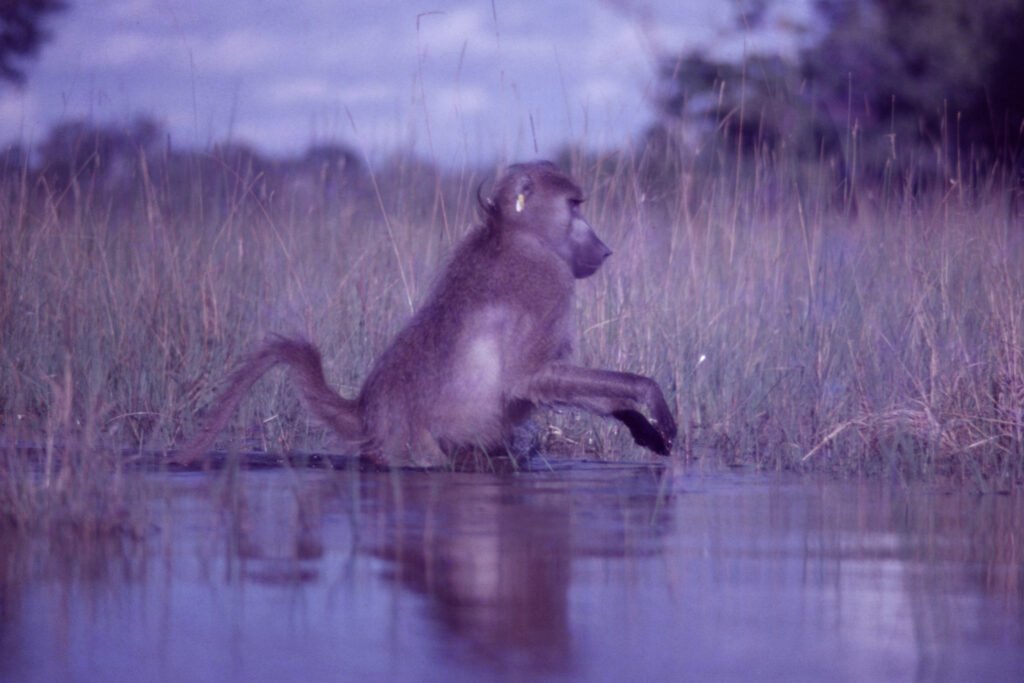
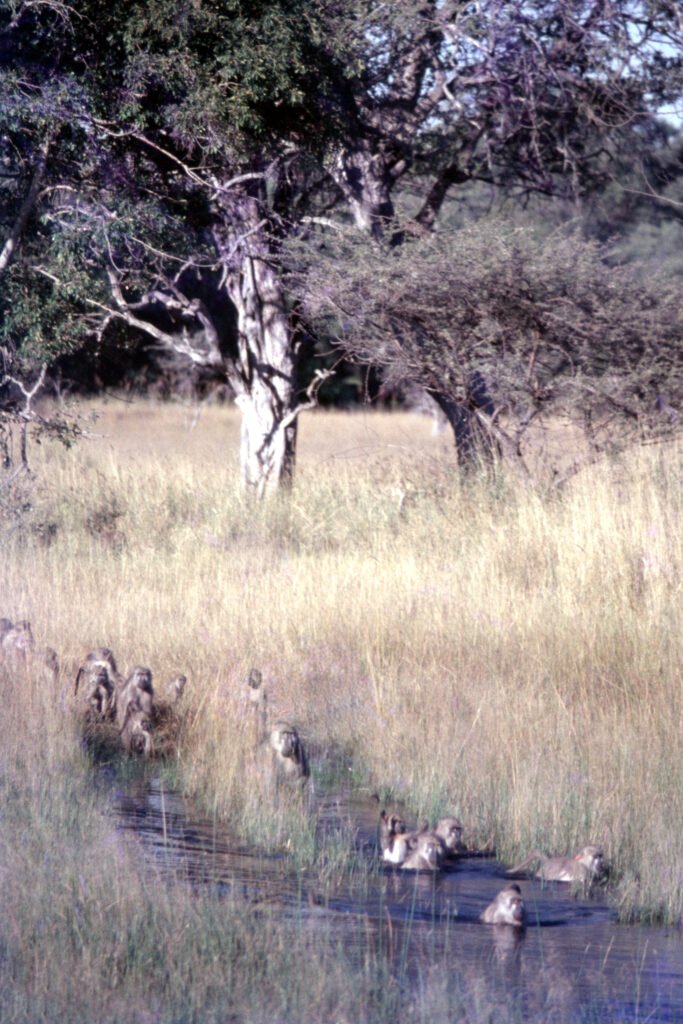
Camp Troop crosses toward the Airstrip Island during a period of heavy flooding.