Photo Gallery of Okavango Baboons – Page 1
Baboon Camp
In April 1977, three of us students from U.C. Davis — Steve, Barbara, and I — arrived in a remote region of the Okavango Delta (maps here) to begin a long-term study of chacma baboons (Papio ursinus) under the direction of Professor William J. Hamilton III (“Bill”).
Before the end of the year, we had built “Baboon Camp” from scratch, habituated a troop of 70 baboons on White Island, identified and named all of the adults, and worked out the dominance hierarchies among both males and females.
The project never could have been undertaken without the unwavering support of P. J. and Joyce Bestelink of the nearby Xaxaba tourist camp. P. J. gets the credit for naming “Baboon Camp.”
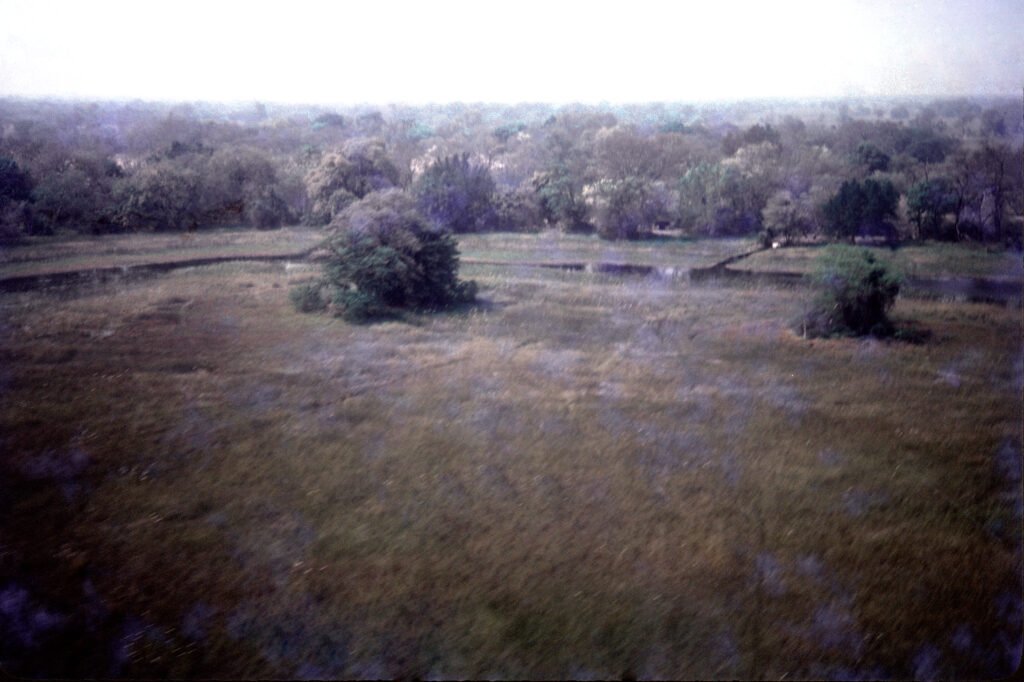
Hazy aerial photo of Baboon Camp — upper right quadrant. The white spot is the Baboon Camp boat. Lloyd Wilmot’s old camp was under the trees on the far left. 
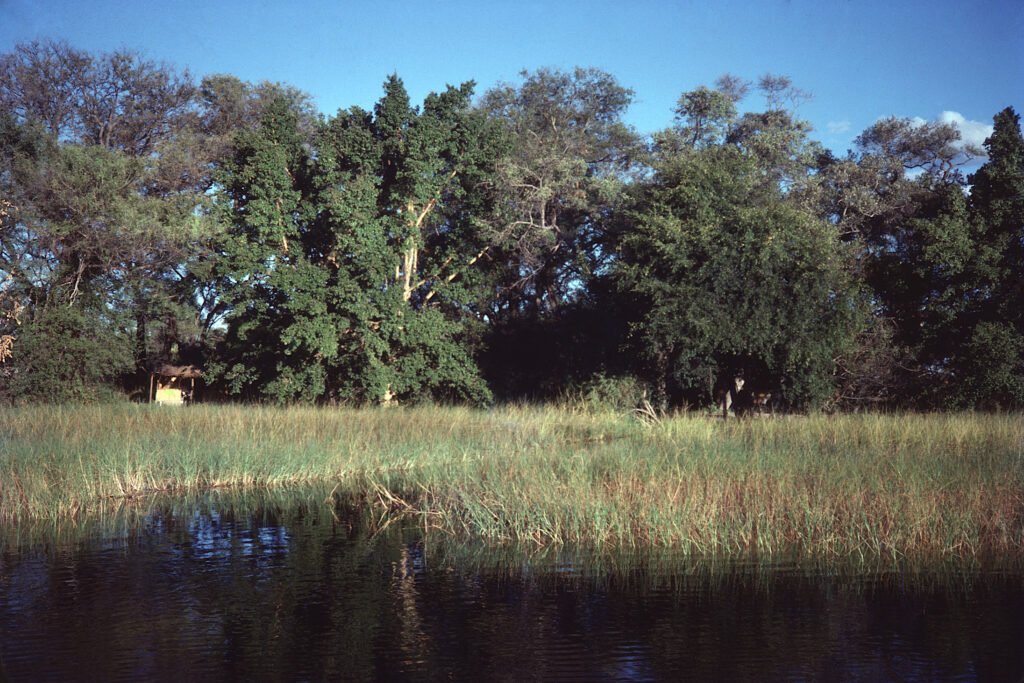
Baboon Camp from the lagoon that connects to the Boro River, 80 yards to the right.
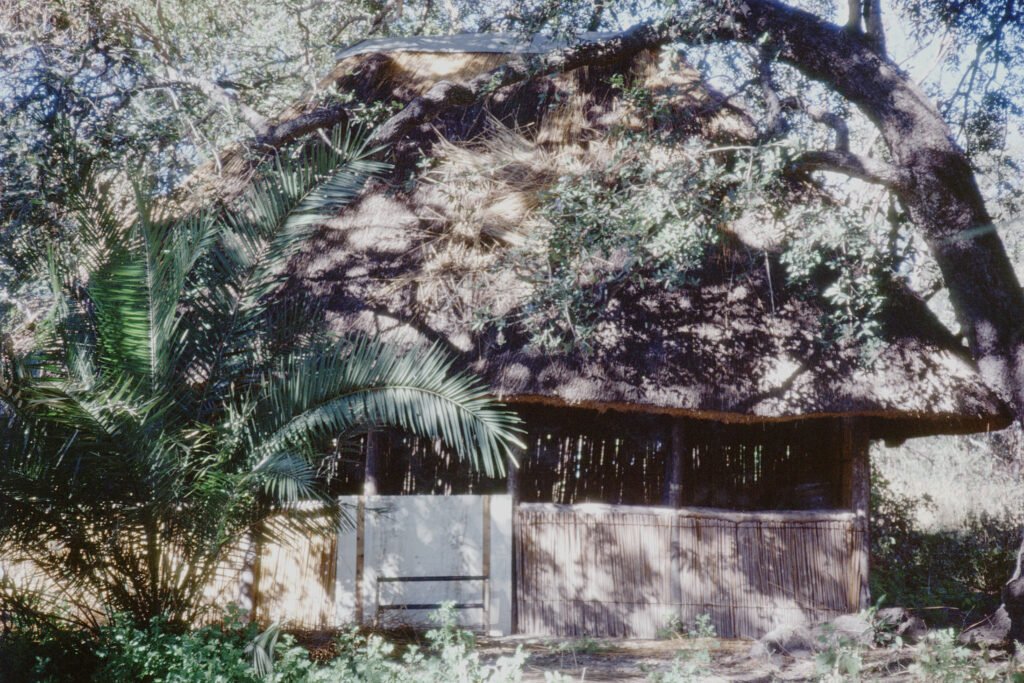
When we arrived, the only remaining structure was Lloyd’s Hut, which became our temporary base of operations while we built Baboon Camp about 100 yards away, a stone’s throw from the Boro River.
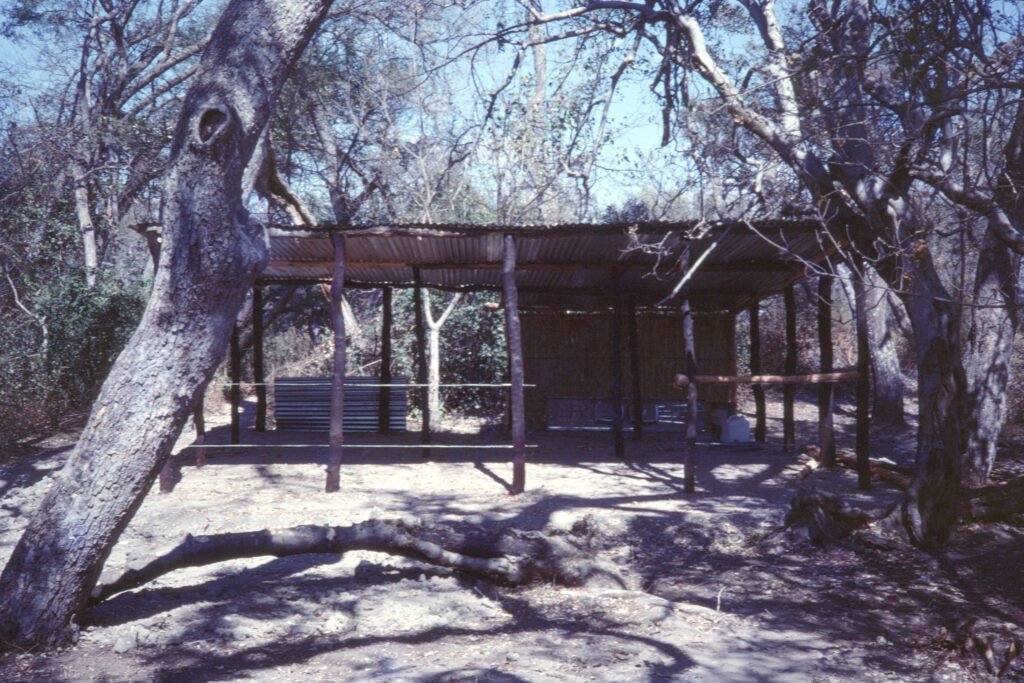
Construction of the main research building, which included a small kitchen and dining area. Men from a nearby village close to Xaxaba Camp crafted all of our reed walls.
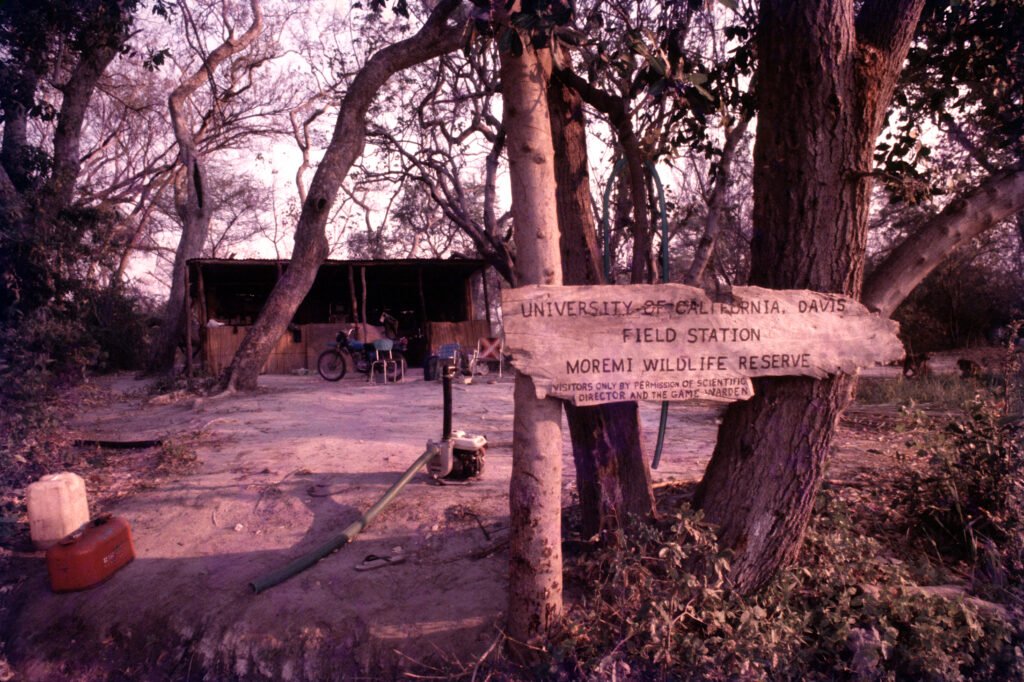
Here is a view of Baboon Camp after a couple of years of operation. Note the water pump that we used to fill the tank (photo, right) that provided running water to the entire camp. Normally, the pump was located along the bank of the Boro River.
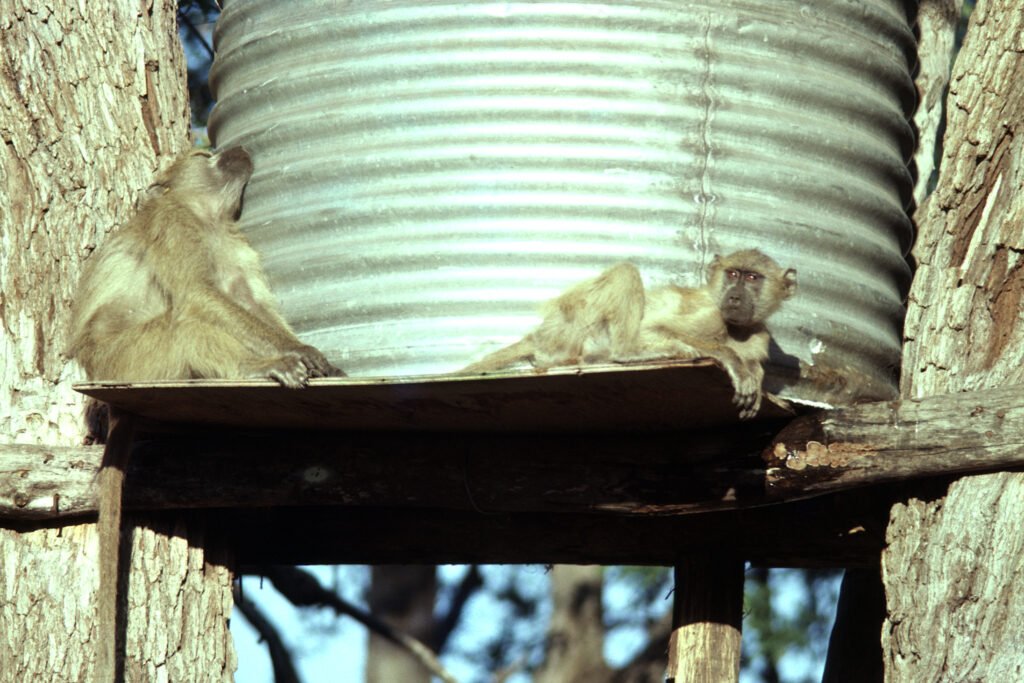
Camp Troop baboons catch some morning rays at the Baboon Camp water tower.
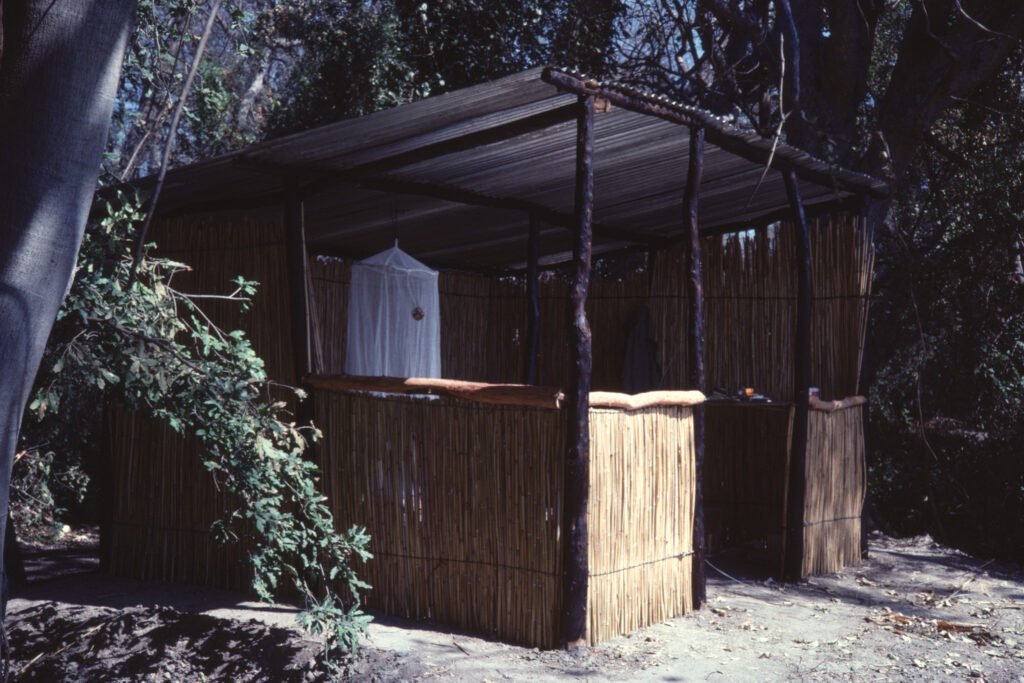
One of the student accomodations, which included a bed, mosquito net, a small desk, a sink with running water, and a beautiful view. There were no doors or windows. The mosquito net offered sufficient protection from snakes, hyenas, etc.
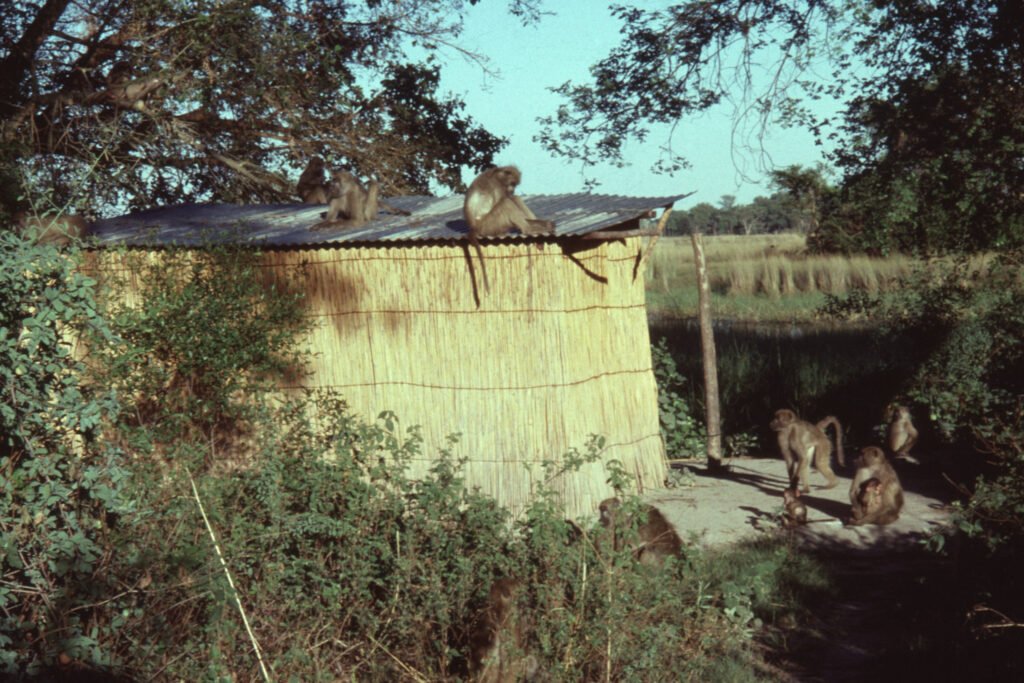
Camp Troop baboons make themselves at home in the early morning.
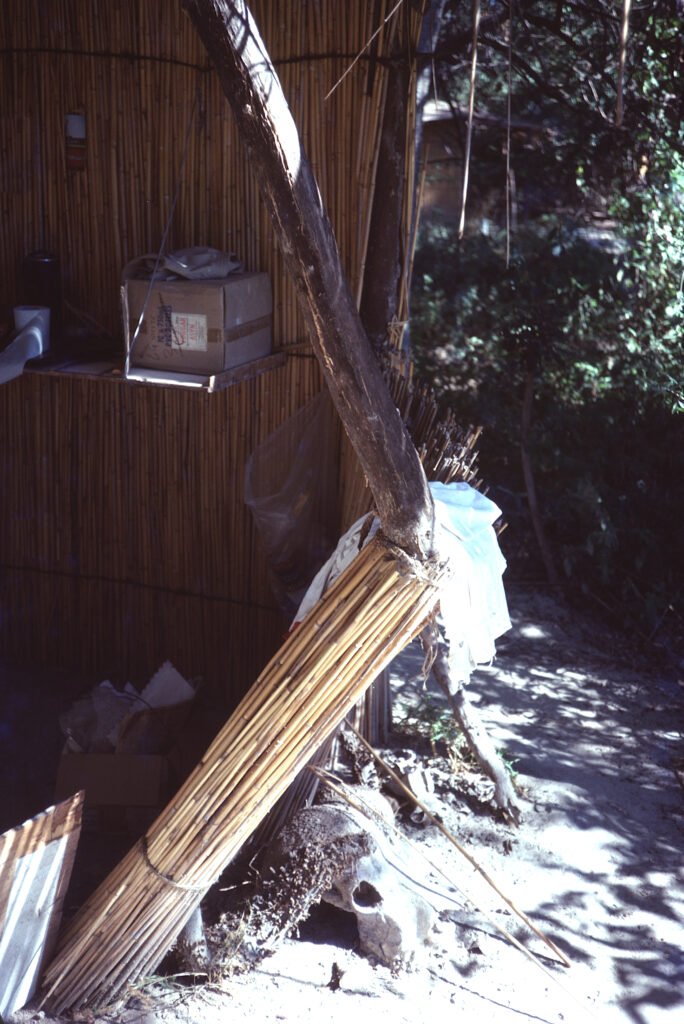
After a couple of years of neglect, the termites took over.
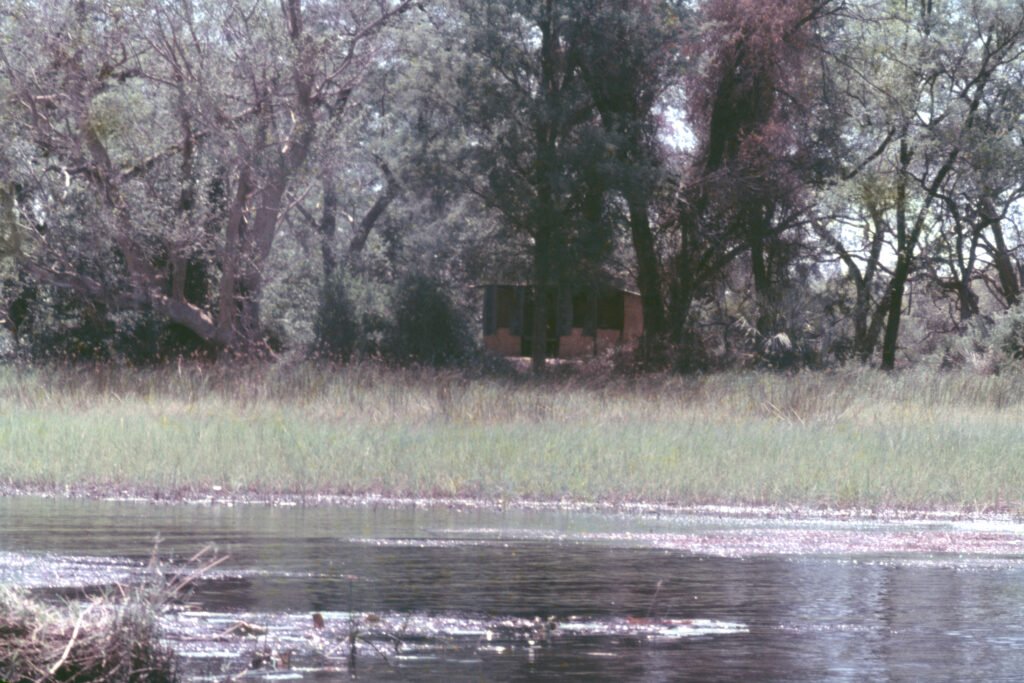
A student hut as seen from across the Boro River.
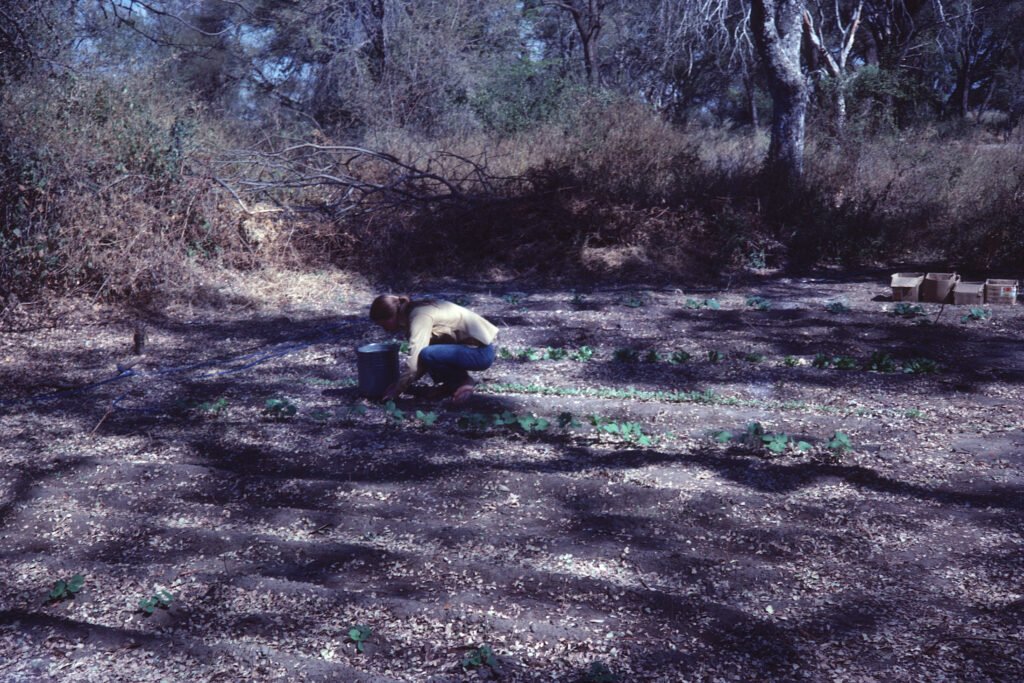
Barbara and Steve pioneered the Baboon Camp garden, which produced lovely vegetables until eventually the Camp Troop baboons lost their fear of us.
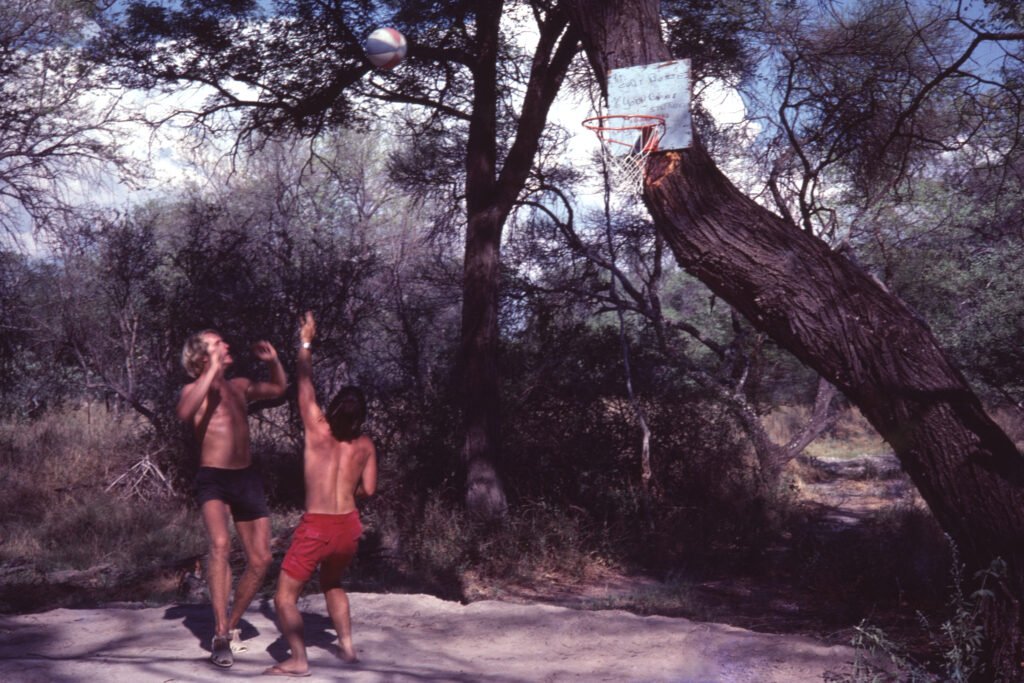
No bush camp would be complete without a basketball court.
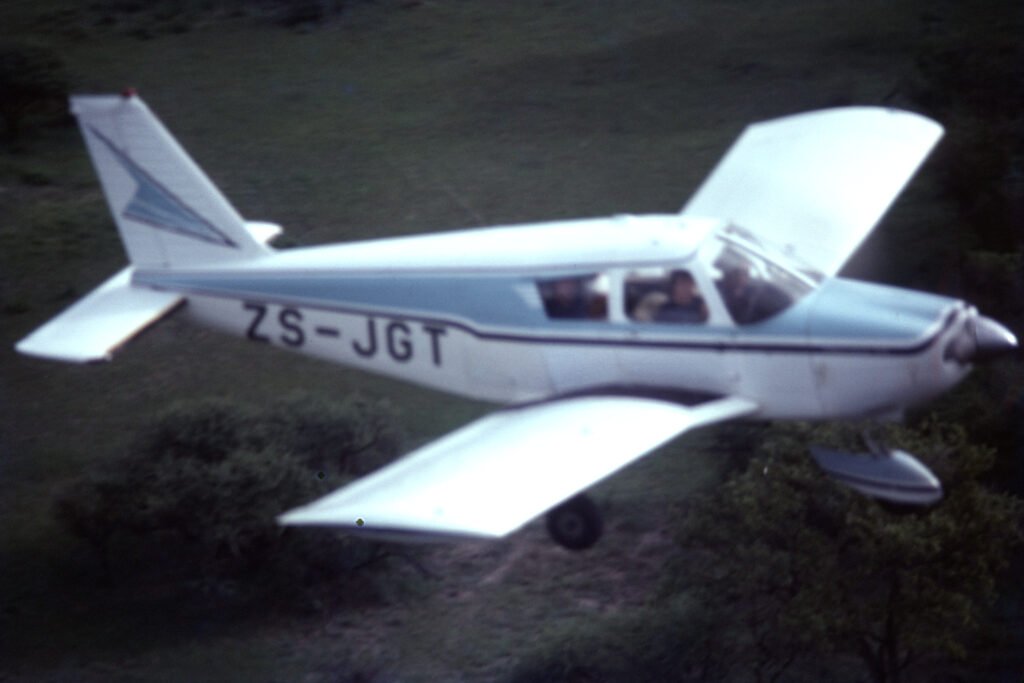
Every month or two, we chartered a plane and pilot from Safari South for supply runs into the town of Maun.
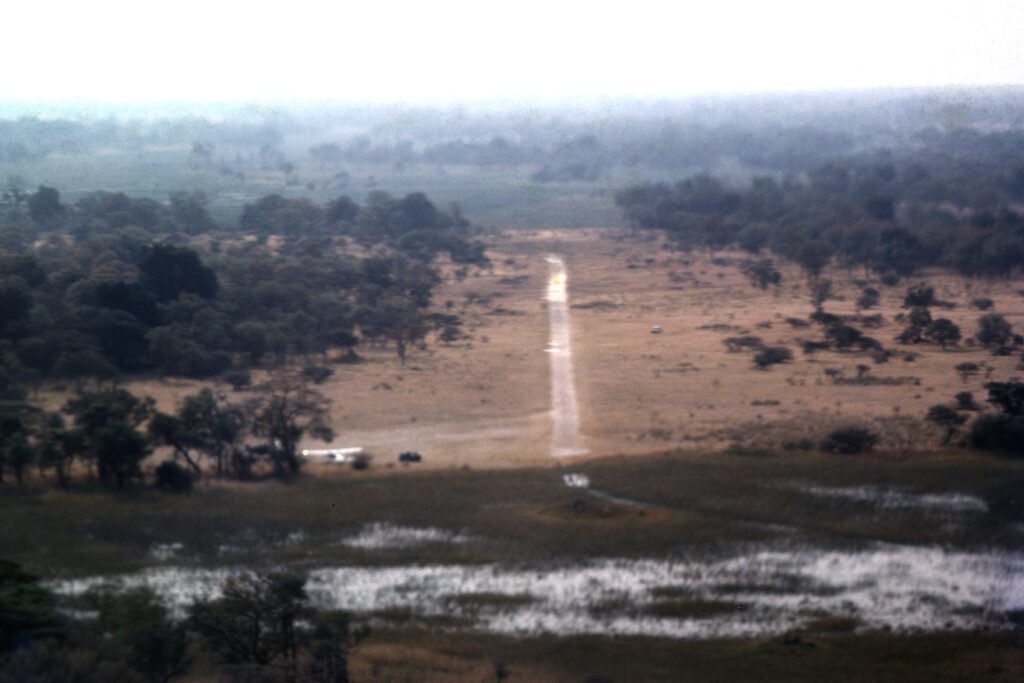
Lloyd built this landing strip a mile from his camp before the Moremi Wildlife Reserve was expanded to the Boro River. The strip continued to service the Xaxaba tourist camp and Baboon Camp until 1980, when P. J. finished his airstrip behind Xaxaba camp.
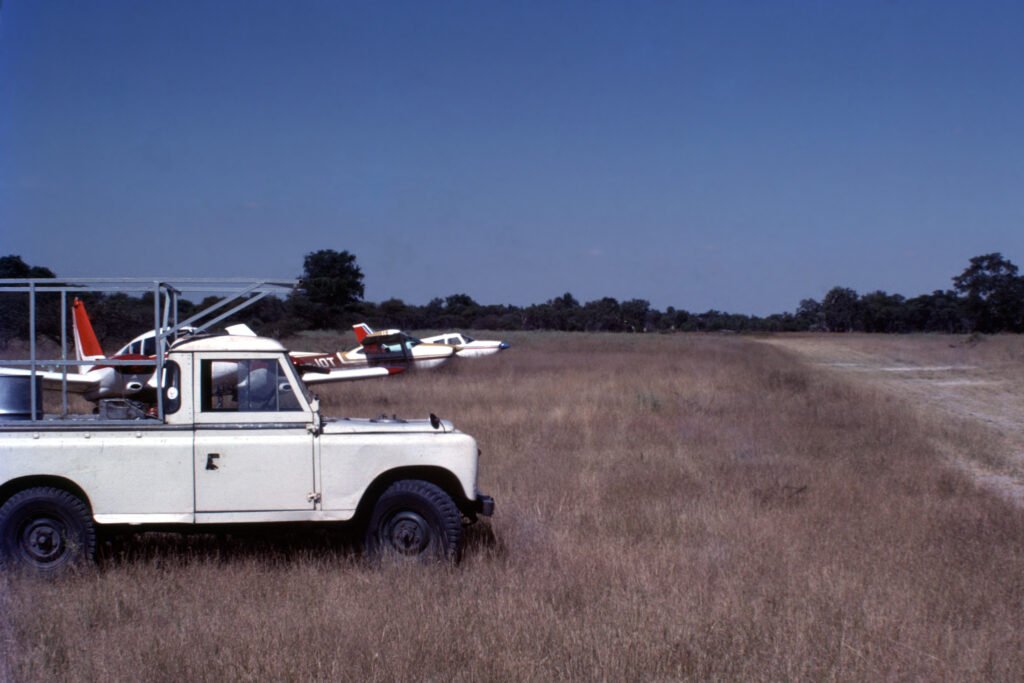
The airstrip island was within the home range of the Camp Troop baboons, and was the site of multiple attacks by leopards and lions on the baboons. The planes here were mostly flown by South African tourists coming to relax at Xaxaba Camp.
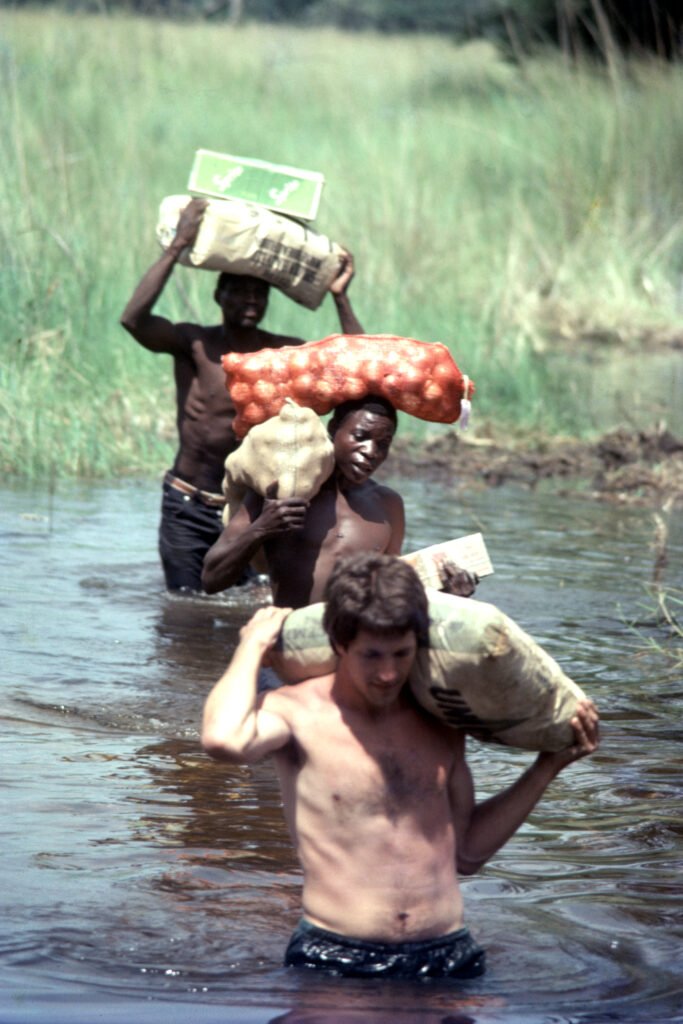
After the floods had receded, we occasionally teamed up with P. J. to drive supplies from Maun to the Kiri River, about 5 miles from the Xaxaba Camp. The river was usually too deep to cross with a vehicle, so we carried the supplies across to another vehicle waiting on the other side.
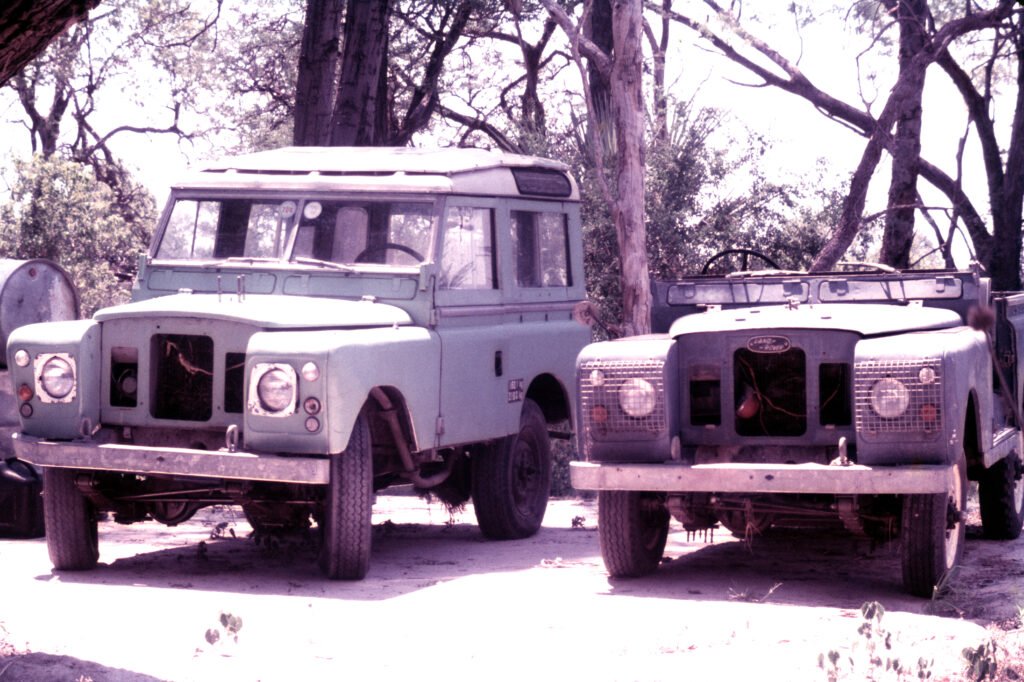
The Baboon Camp Vehicle Fleet. The green petrol Land Rover (left) lasted for about 18 months before the engine siezed up after one too many deep water crossings. The blue diesel rover (right) lasted longer, but usually required two large batteries to start.
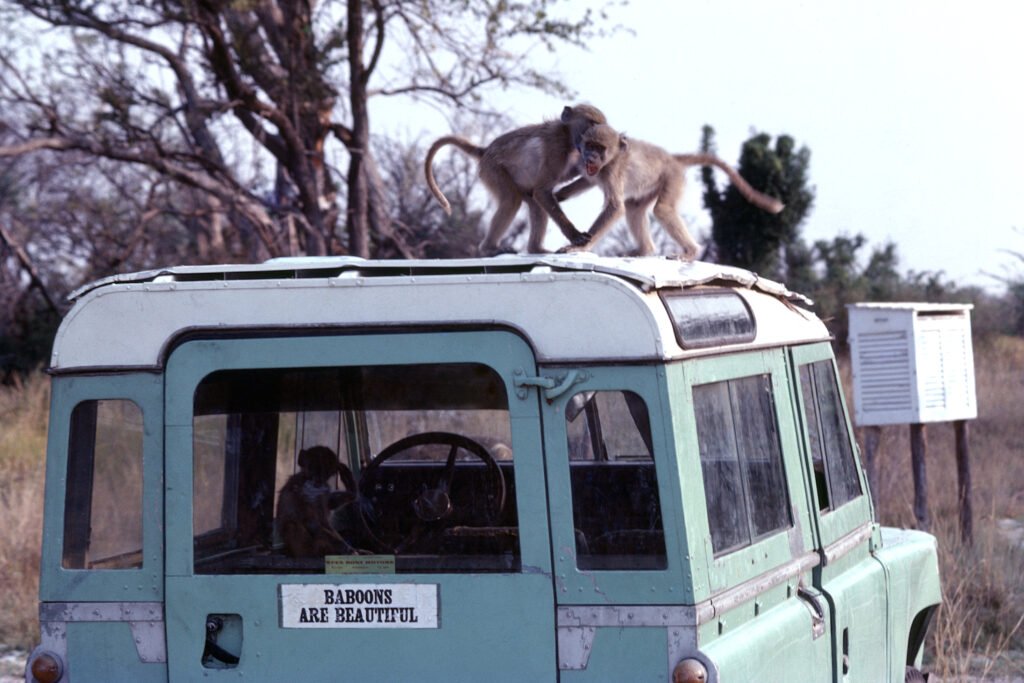
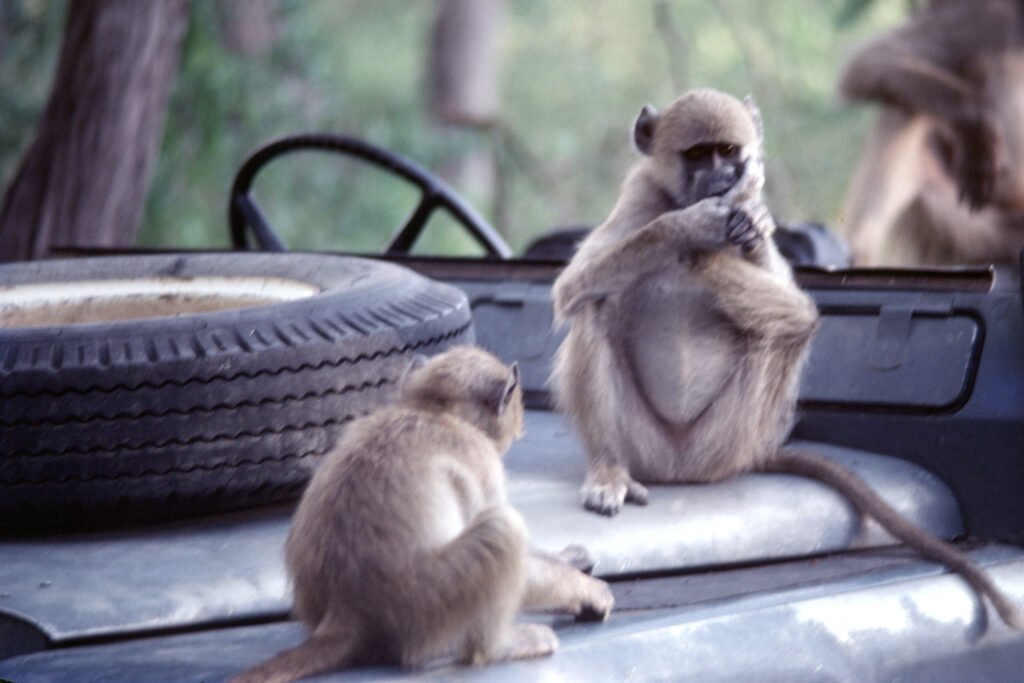
Camp Troop youngsters enjoyed playing on the vehicles.
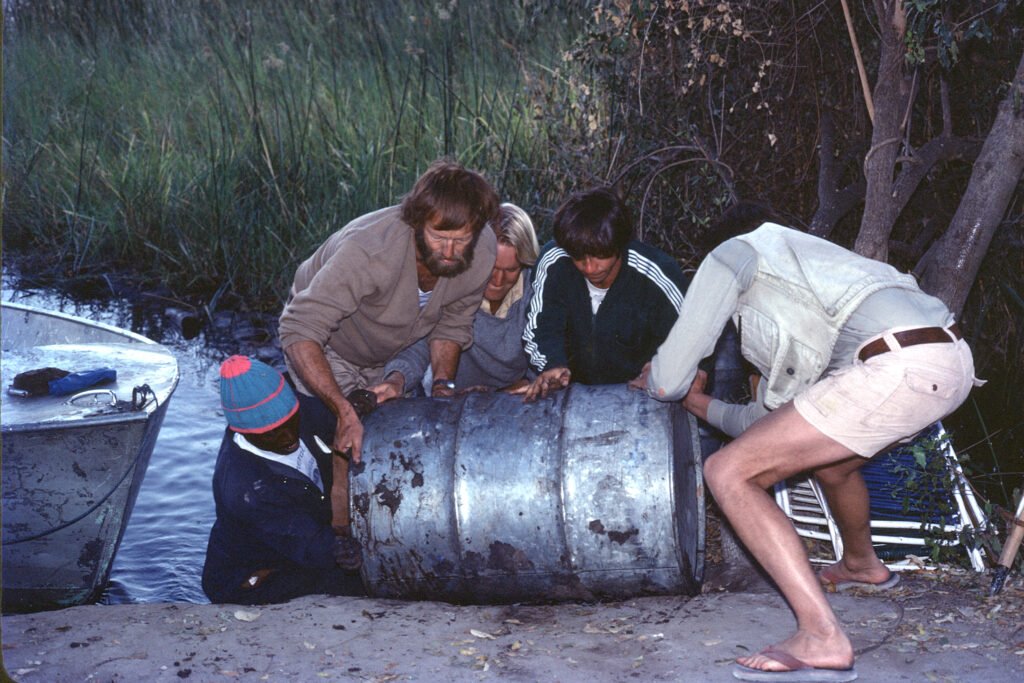
Bodimo, Bill, Curt, Steve, and Derek offload a 55-gallon drum of petrol from P. J.’s boat.
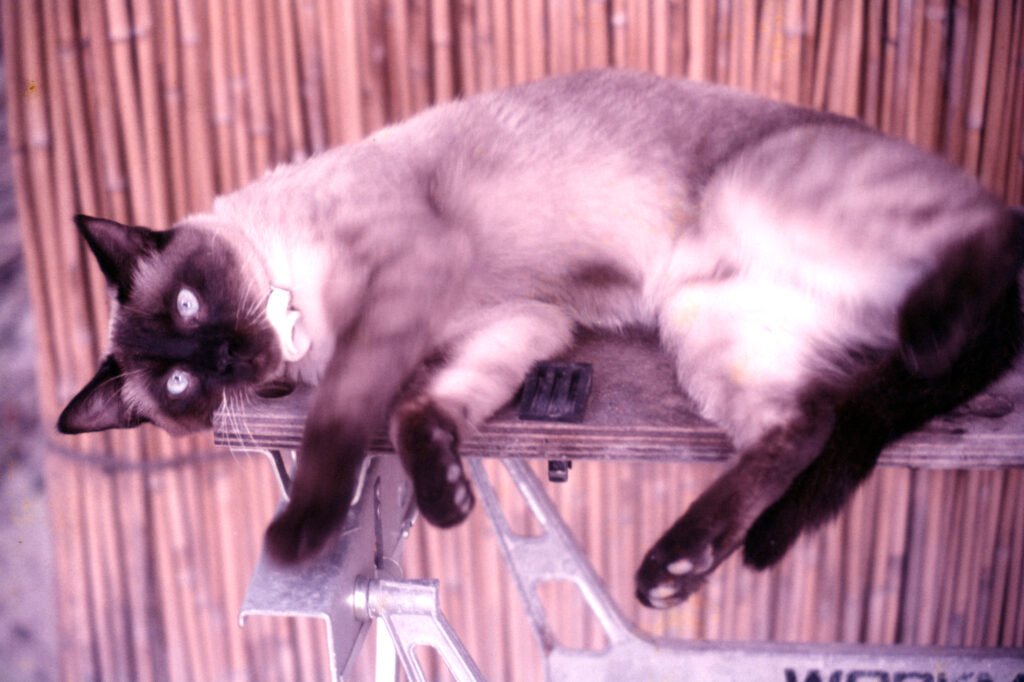
Godi the cat kept the camp relatively snake-free.
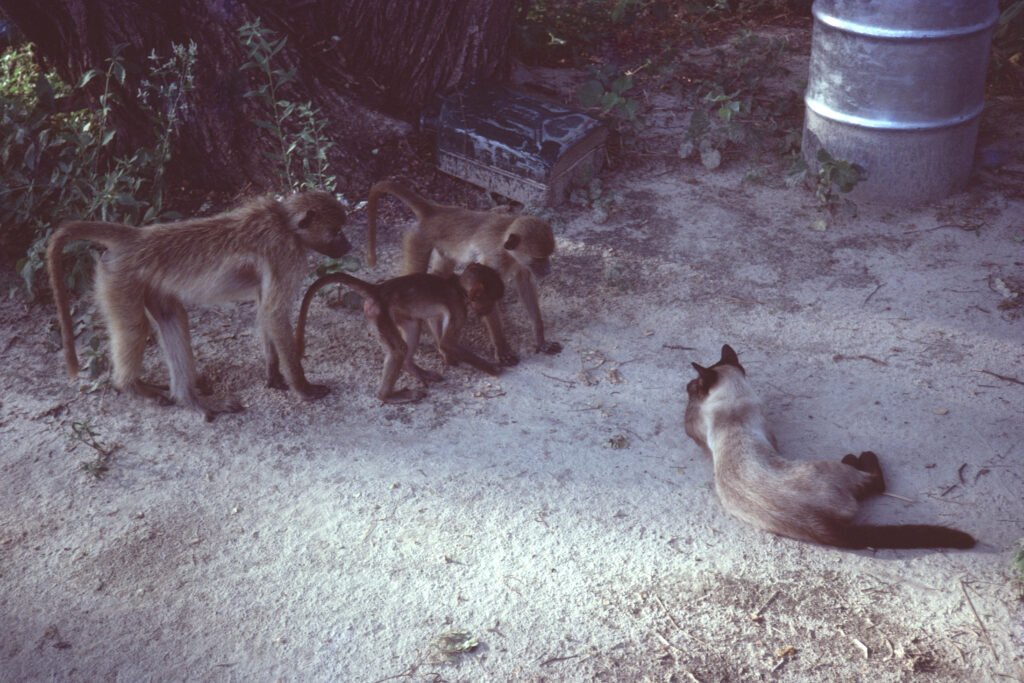
Godi and the young baboons got along fine.
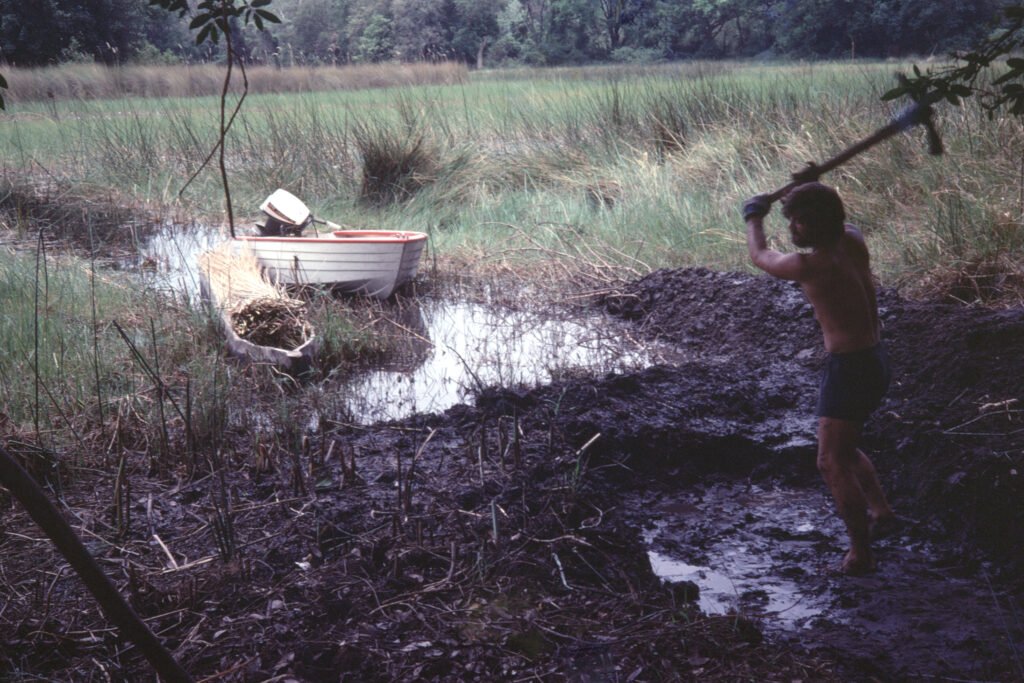
Steve dredges the boat landing area after the floods had receded. In the background are the Baboon Camp “yacht” and dugout canoe.
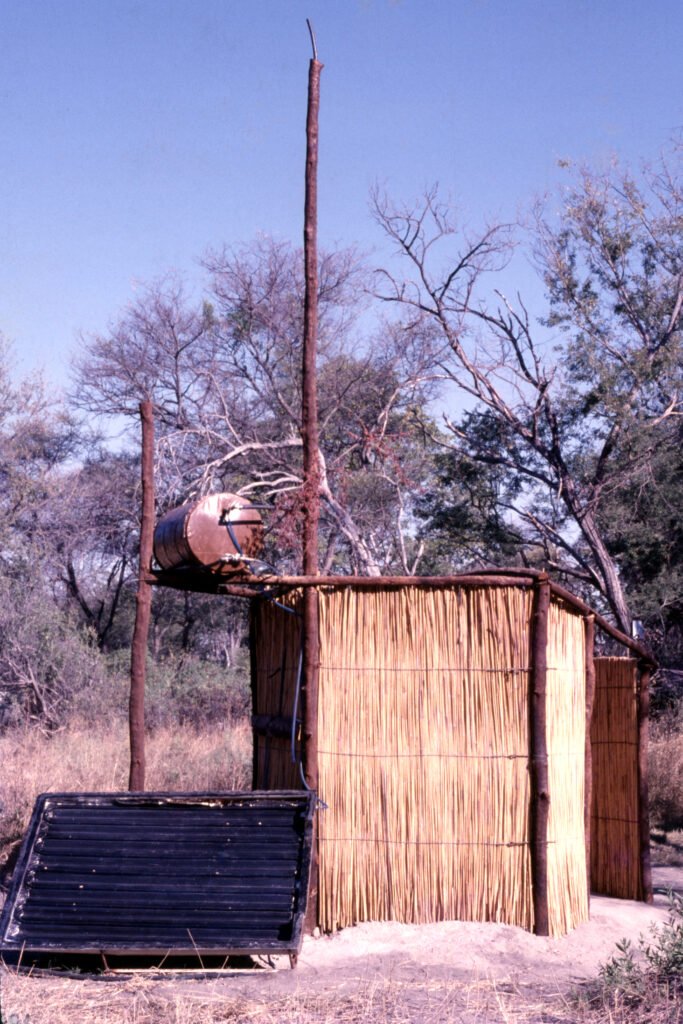
My father Bill visited the camp in early 1980 and spent an entire week designing, supervising, and building a solar shower. The collector was made from the roof of one of the Land Rovers. It actually provided a luke warm shower.