
Looking Back Fifty Years
I began my scientific career in 1974 as an undergraduate student helping Jane Goodall at Gombe National Park. Over the next twelve years, I studied wild chimpanzees and baboons as well as captive mangabeys and macaques — then left science for the computer industry. After growing disillusioned with university politics, I accepted a position with a Fortune 100 company. The decision was easy.
Now, fifty years later and long retired, I find myself looking back on those years with a mixture of pride, gratitude, and head-scratching disbelief at some of the crazy things we did. There were genuine hardships: living paycheck to paycheck while coping with the relentless “publish or perish” culture of academia. But there were also moments of camaraderie and adventure that made it all worthwhile.
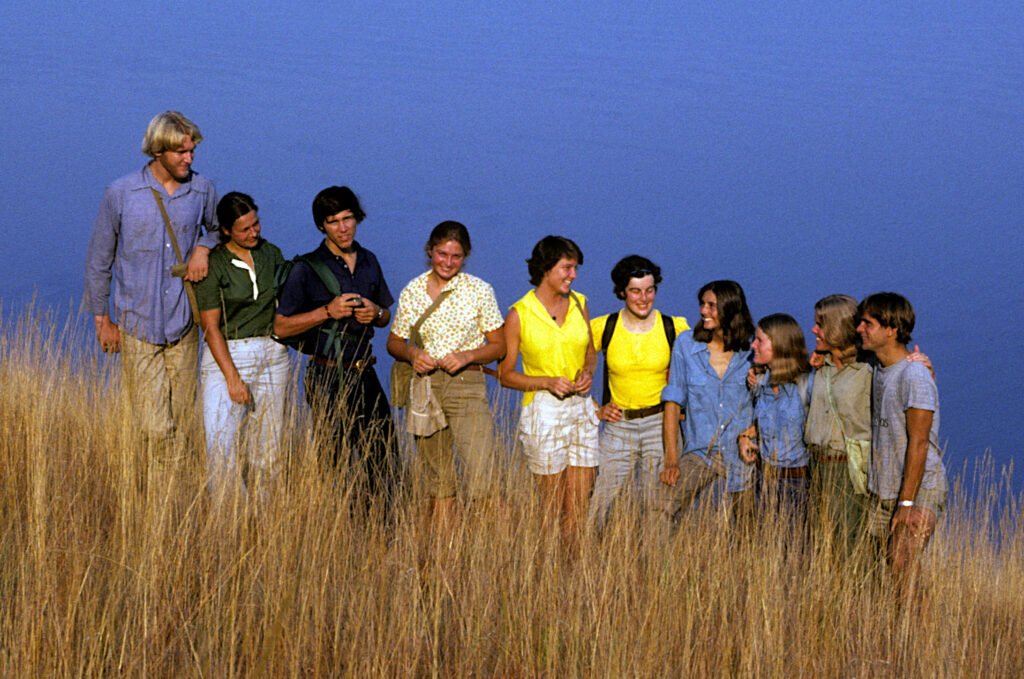
Group photo on top of the Rift during a hike from Gombe to the town of Kigoma (August, 1974, photo by budding actress Candice Bergen, courtesy of Grant Heidrich).
Notable Discoveries
1. Infant-carrying by male chacma baboons
By 1977, researchers across East Africa had observed adult male baboons occasionally carrying infants during tense interactions with rival males. My interpretation, at least for chacma baboons, was that these males were protecting their likely offspring from newly immigrated, high-ranking males who posed a threat to the infants’ lives. The findings were significant enough to merit a cover article in the journal Science.
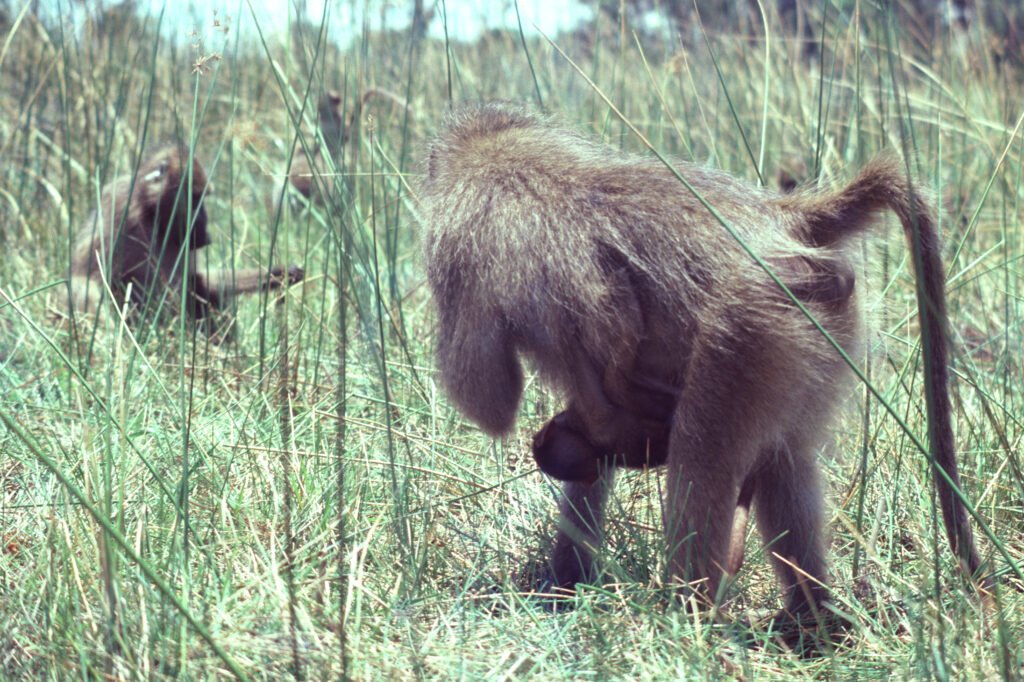
Infant Fanni clings to the chest of Captain Kirk while the alpha male Norbert feeds nearby. Norbert had immigrated to the group recently and could not have been Fanni’s father (more photos here).
2. Tail-raising by baboon mothers toward immigrant males
At several field sites in East Africa, researchers had found that mothers with young infants often associated closely with males who were likely to be the infants’ fathers. We found, in addition, that mothers consistently showed alarm in the presence of nearby high-ranking immigrant males who could not have been the fathers, raising their tails, avoiding the males, and sometimes screaming in distress.
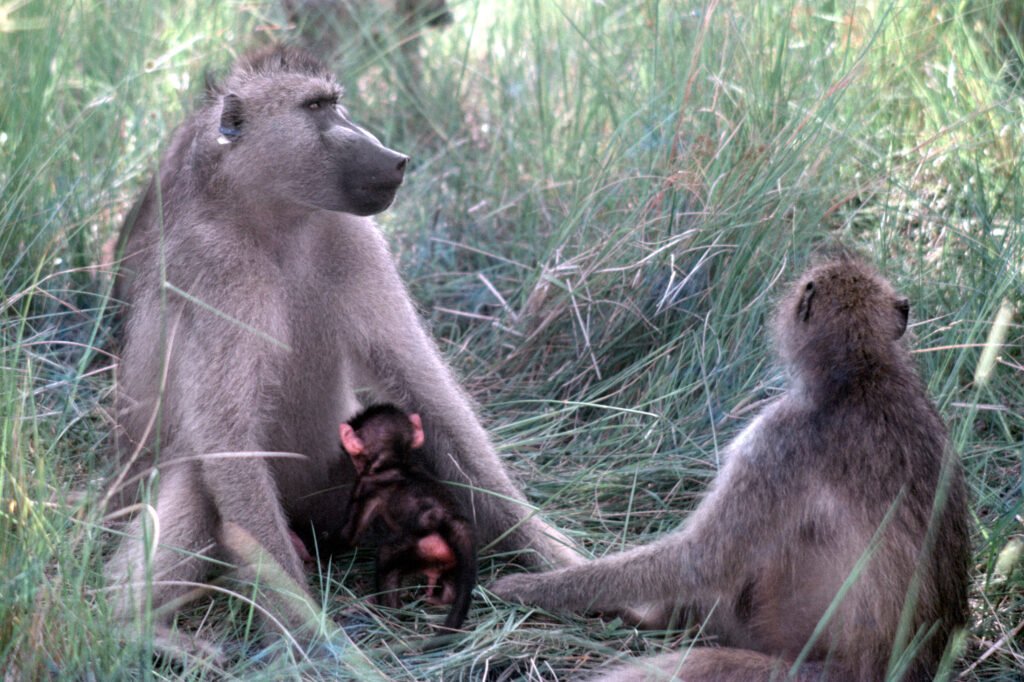
Mothers typically tolerate and often seek out males who are likely to be the fathers of their infants. Here, an infant plays comfortably beside the alpha male Norbert, who by then had spent more than six months in the troop and likely fathered the youngster.
3. Hunting and lack of sharing by lone chimpanzees
By 1974, Jane Goodall and her team had established that male chimpanzees typically hunted in groups for baboons and red colobus monkeys, and that they often shared meat after a kill. Less clear was what happened when a male chimpanzee made a kill entirely on his own. Would he recruit other chimpanzees and share the meat, or consume it himself? In the few cases we observed, the lone hunter ate the entire kill without attempting to attract others.
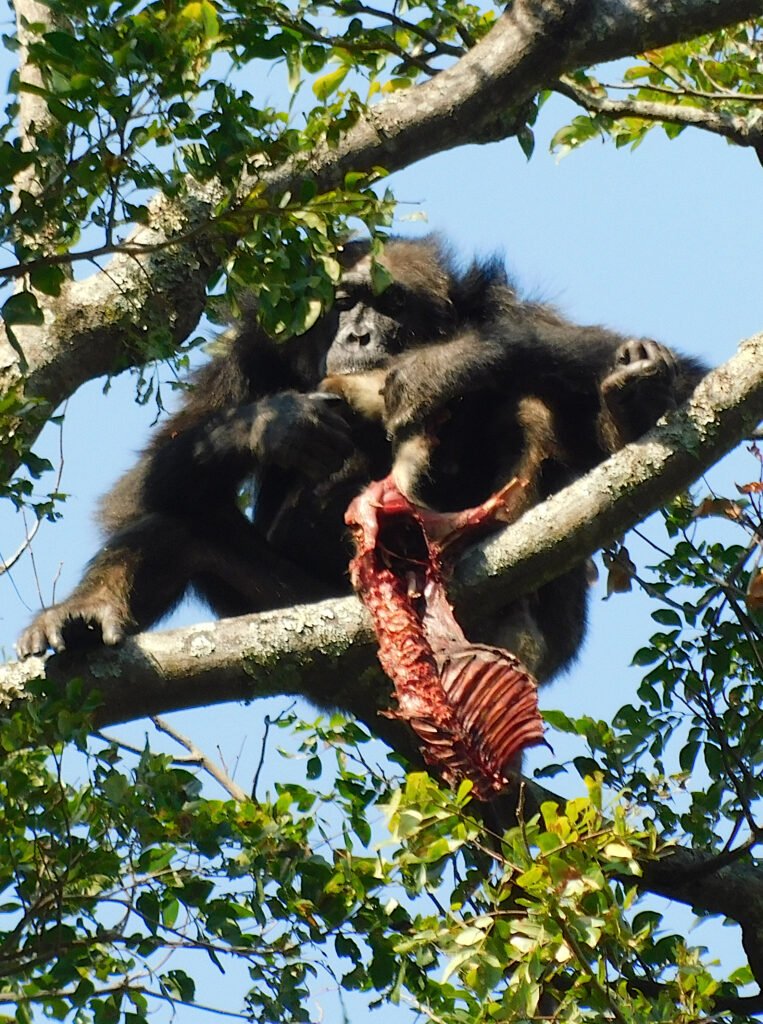
On my first visit to Gombe in 50 years, our guide Sixtus spotted the old adult male chimpanzee Sheldon eating a monkey — quietly and all alone. This sighting was quite a lucky coincidence.
4. Lions and leopards hunting baboons
By 1977, there were many accounts of lions and leopards preying on baboons across East and Southern Africa. Our observations confirmed that lions sometimes ambush baboons opportunistically during the day, while leopards primarily hunt at night near baboon sleeping sites.
One of our more surprising findings was that leopards did not always rely on surprise. On multiple occasions, I watched a leopard remain in the baboon sleeping trees for more than two hours before finally making a kill.
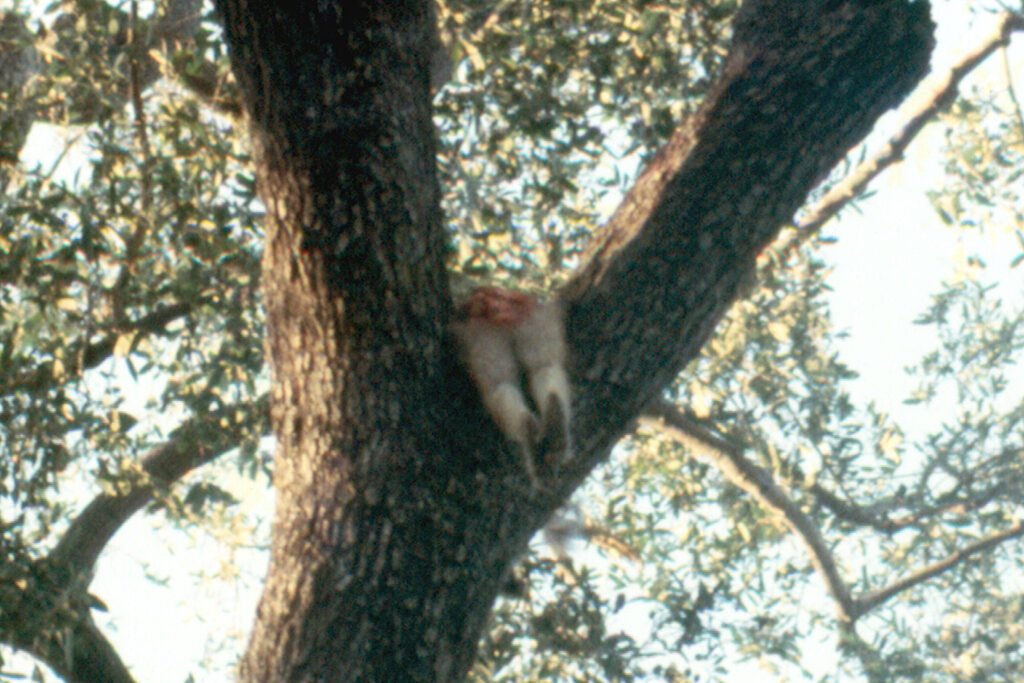
Adult female baboon from Z Troop cached in a tree by a leopard.
Things I’m Still Proud Of
1. The Figan Follow
For fifty consecutive days at Gombe, David Riss and I alternated four-day blocks following Figan from dawn to dusk. Tracking chimpanzees through steep, forested terrain for days at a time was physically demanding. It remains one of the longest continuous observations of any wild primate.
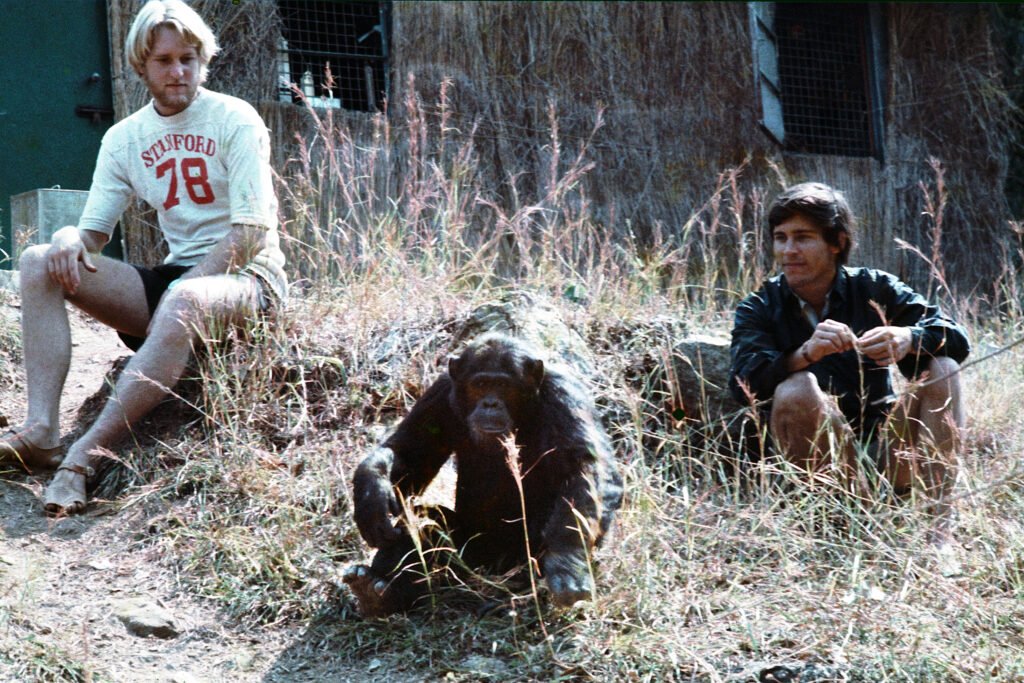
Curt, Figan, and David during the Figan Follow (photo by Jane Goodall).
One graduate student criticized the project by arguing that such sustained focus on a single animal was unscientific and an unnecessary burden on Jane’s staff. Fortunately, Jane disagreed. She later devoted seven pages of her book Through a Window to the Figan Follow.1
2. Establishing Baboon Camp and habituating two troops
Under the direction of Professor William J. Hamilton III, and with enormous support from our neighbors P. J. and Joyce Bestelink, Steve Smith, Barbara Kus, and I established a new camp in a remote region of the Okavango Delta. In a relatively short time, we habituated two troops of chacma baboons — roughly 70 animals each — learned to recognize individuals, and worked out their dominance hierarchies.
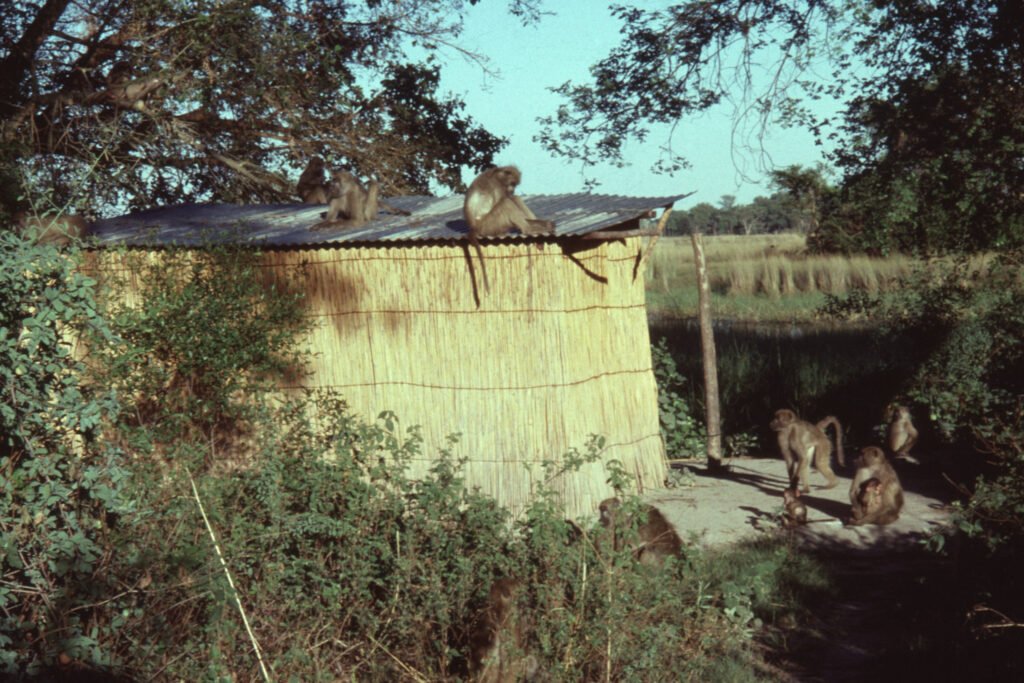
Camp Troop baboons make themselves at home at Baboon Camp.
3. Sleeping at the baboon roost
During my time in the Okavango, I spent roughly fifty nights sleeping under the stars at the primary baboon roost on White Island, almost always alone. Most nights were peaceful. But leopards appeared multiple times to hunt baboons, and on one evening three lions arrived at dusk and pinned me up a tree for twenty minutes.
I look back on those nights now with a combination of disbelief and gratitude.
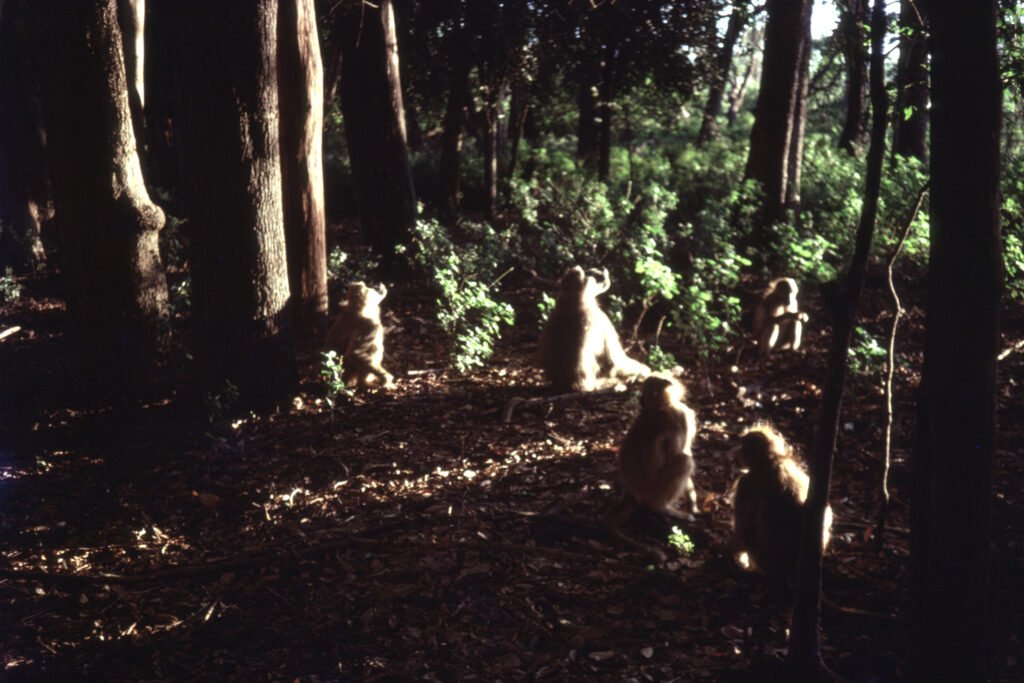
Baboons catching some early morning rays at the White Island roost. On the night the lions showed up, I somehow levitated into the tree on the left. From a branch barely ten feet above the ground, I listened to the lions growling beneath me in the darkness for what seemed like an eternity. At one point, I had a bona fide out-of-body experience. Then, mercifully, the lions buggered off.
4. Wildlife photography
When I arrived at Gombe, many of the students had cameras that were too bulky to carry while tracking chimpanzees through dense forest and rugged terrain — so most photos from that era were taken in and around the feeding station.
My father sent me a pocket-sized camera that I carried in the field. It allowed me to take photos of chimpanzees in situations rarely documented at the time, including some of the first images of waterfall displays and territorial patrols. Jane later used several of those photos in her books and in a National Geographic article. Fifty years later, they’re still coming in handy, including on this website.
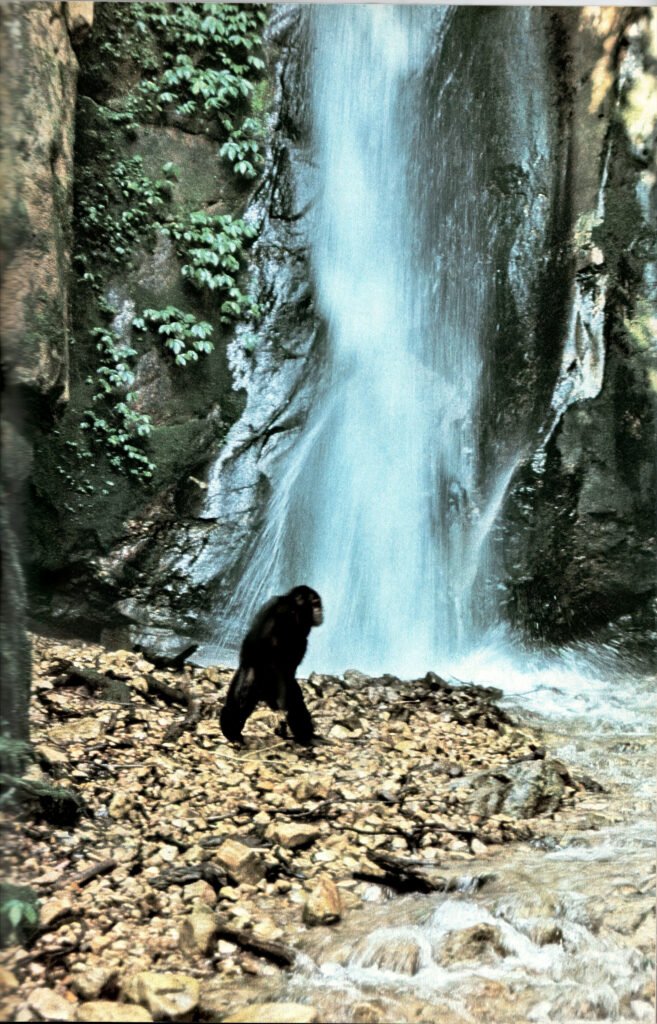
Figan runs bipedal and hurls rocks near the base of the Kakombe waterfall (© National Geographic Society).2
Some Lessons Learned
1. Maximize your time with the animals
In fieldwork, there is no substitute for time with the animals. When I arrived at Gombe, the data sheets were cumbersome and time-consuming. We streamlined them so we could spend more time watching chimpanzees and less time transcribing notes.
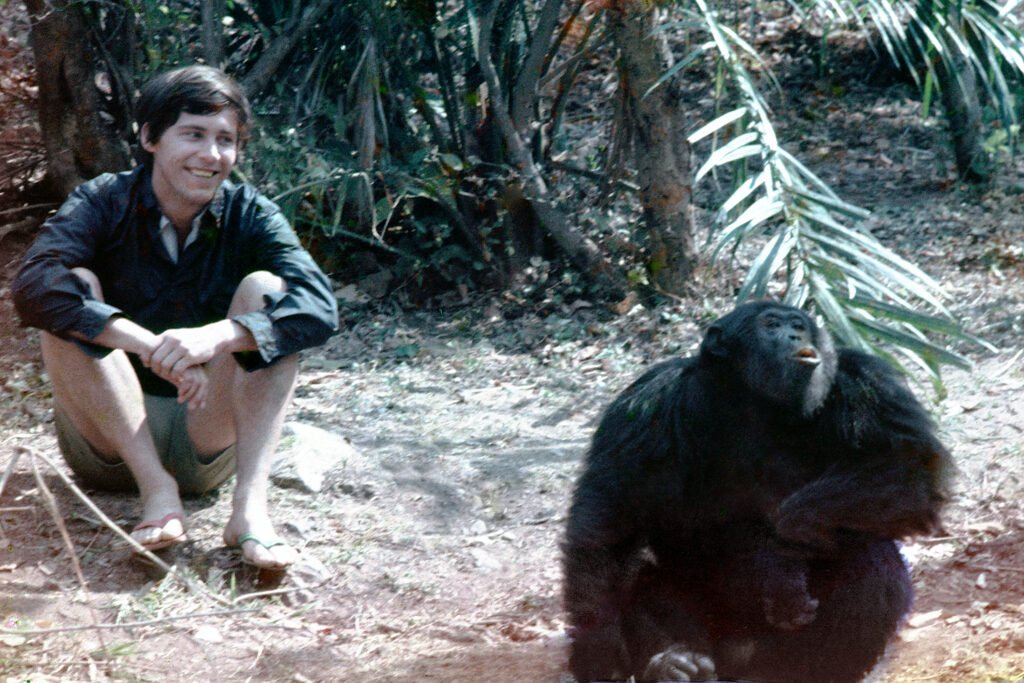
David watches Figan hooting (photo by Jane Goodall).
My goal became logging at least one hundred hours per month with the animals. I adopted this routine early at Gombe, thanks in good part to David Riss, whose friendly competition grew into a major collaborative project and a lifelong friendship.
2. Public relations matter
You can make important discoveries, but if you don’t communicate their significance, they may receive little attention and gradually disappear into the scientific literature. Conversely, even modest findings can gain significant visibility when backed by effective networking.
Scientific conferences matter: attend them, meet people, and build relationships. Ask questions, and spend more time listening to what others have to say than talking about yourself. (I know, this is obvious, but still worth saying.)
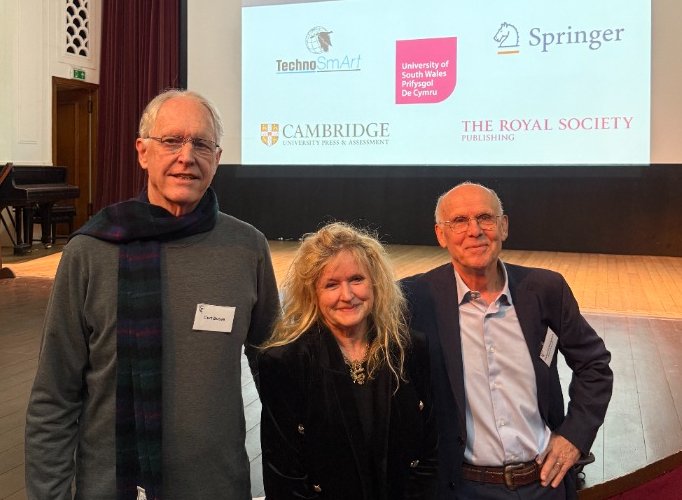
Curt Busse, Carin Harrington, and Richard Wrangham following Richard’s engaging and heartfelt memorial lecture “Jane Goodall: The Icon and the Person” at the Primate Society of Great Britain meeting in Cardiff, Wales, November 2025 (photo courtesy of Carin Harrington).
3. Breaking into a mature field
By the time we began our work in the Okavango, baboons had already been studied for more than a decade at multiple East African sites. Entering a well-established field with new ideas and observations is difficult — especially when strong personalities and professional rivalries are involved. As I said above: public relations matter.
I remain especially grateful to Ray Rhine at Mikumi for his encouragement, and to Anthony Collins at Gombe for his friendship and collaboration, which led to our joint publication with Jane.
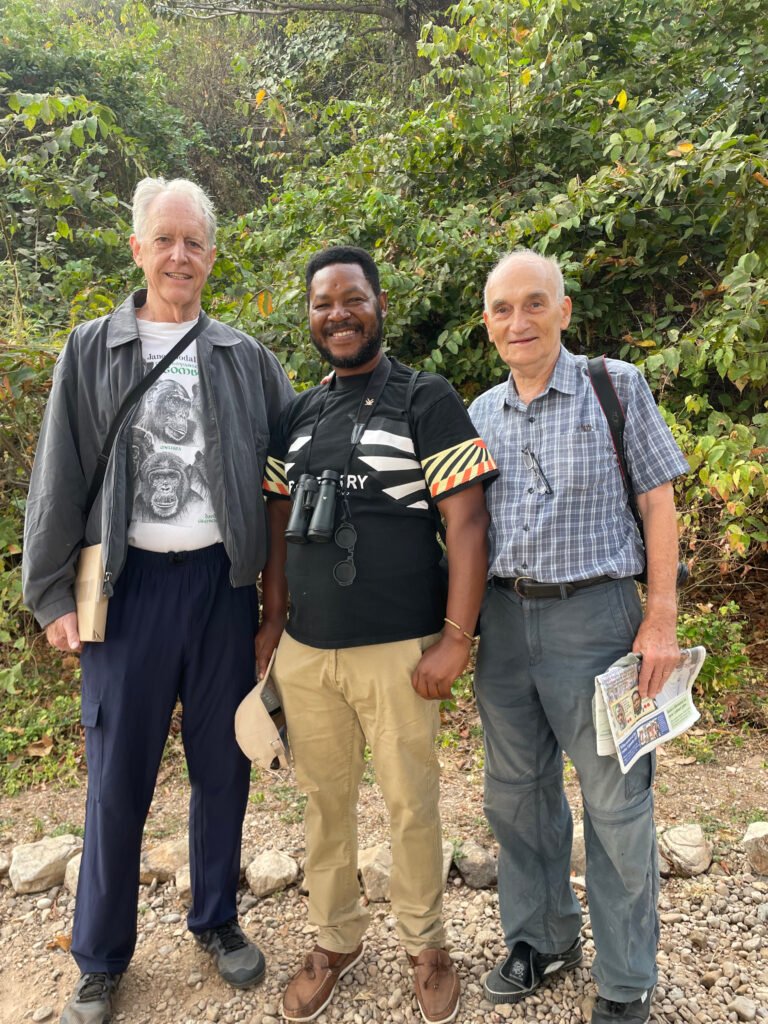
Curt, Sixtus, and Anthony at the Gombe Research Centre in 2024. Anthony has been studying baboons at Gombe since 1972.
I have countless great memories from my years in Africa.
I remember standing in a torrential downpour at Gombe when Figan suddenly charged from behind, knocked me off my feet, and dragged me ten yards down a muddy hillside by the ankle.
I remember sleeping beneath the baboons on White Island with nothing more than a thin mattress and a mosquito net, and being visited almost every night around 2:00 a.m. by a curious porcupine.
I remember Steve and me taking our small boat out onto the Boro River after dark, and — as part of a game department survey — catching small crocodiles with our bare hands.
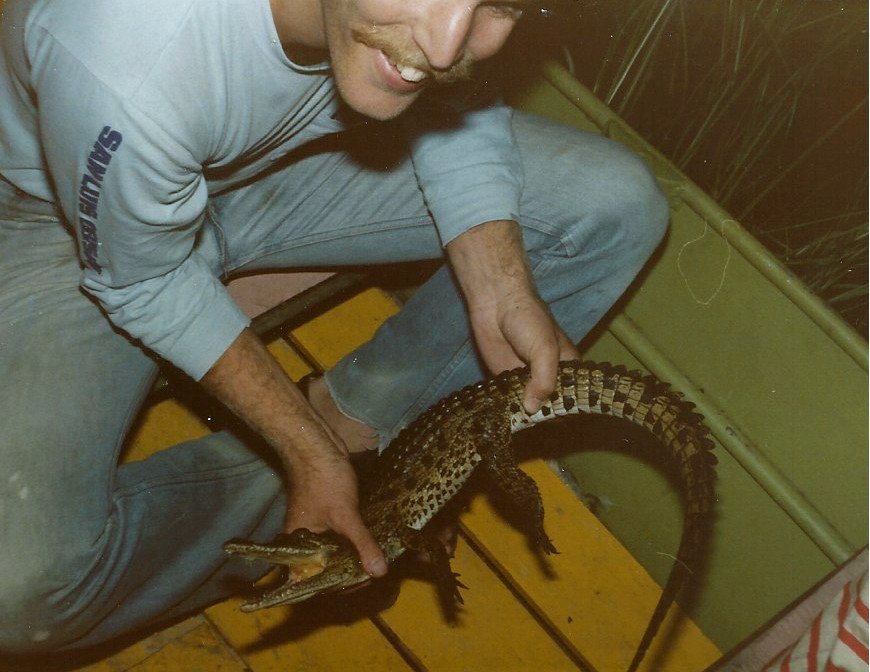
My brother Matt holds a young crocodile that Steve caught during a nighttime boat expedition. After marking the little fellow,3 we returned it unharmed to the water.
At the time, these moments simply felt like part of everyday life in the field. Looking back now, they seem quite extraordinary.
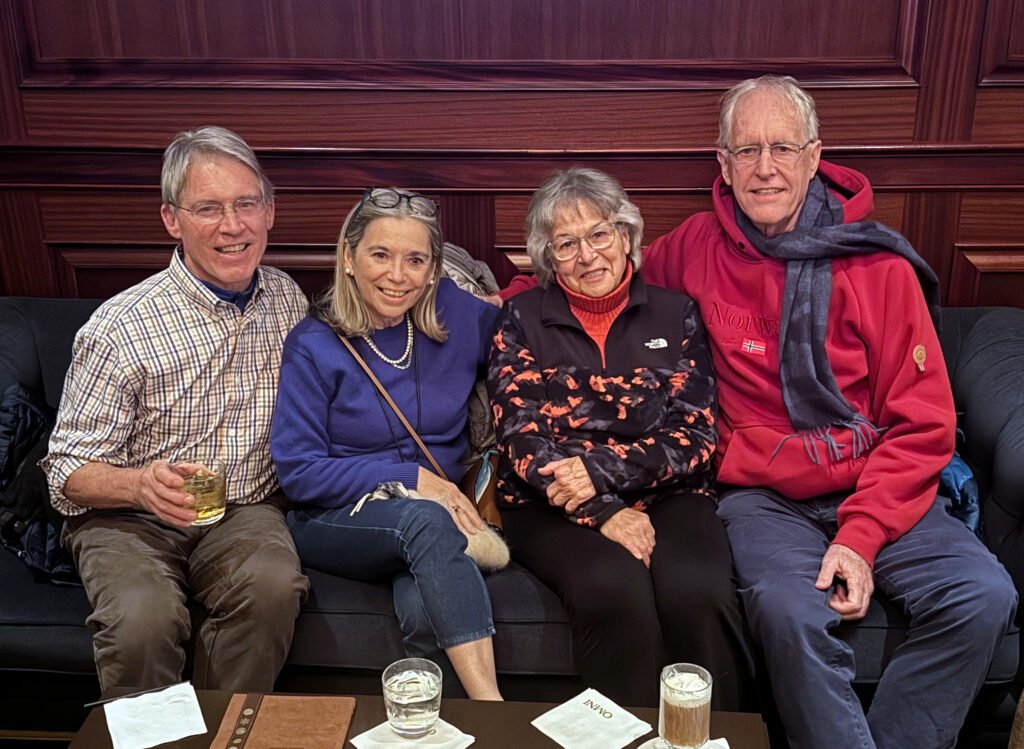
David, Arlene, Emilie, and Curt at Jane Goodall’s memorial in Washington, D.C., honoring the life and legacy of a pioneer, an icon, and a dear friend.
What I value most are the friendships that grew out of those shared experiences. Remarkably, some of those friendships remain as strong today as they were fifty years ago.
Curt Busse
May, 2026
- Goodall, J. (1990). Through a Window: My Thirty Years with the Chimpanzees of Gombe. Boston: Houghton Mifflin Company. Pages 57-64.
↩︎ - This photo appeared on page 602, National Geographic, May, 1979. According to the National Geographic Support web site (Article Number: 000001234) as of at least January, 2024: “National Geographic is no longer licensing images, art, text or video to third parties. If you are interested in using content seen in a National Geographic product for your project, please contact the original content creator about possible usage permissions.”
↩︎ - We marked the young crocs by clipping one of the raised scales (“scutes”) along the top of the tail.
↩︎